
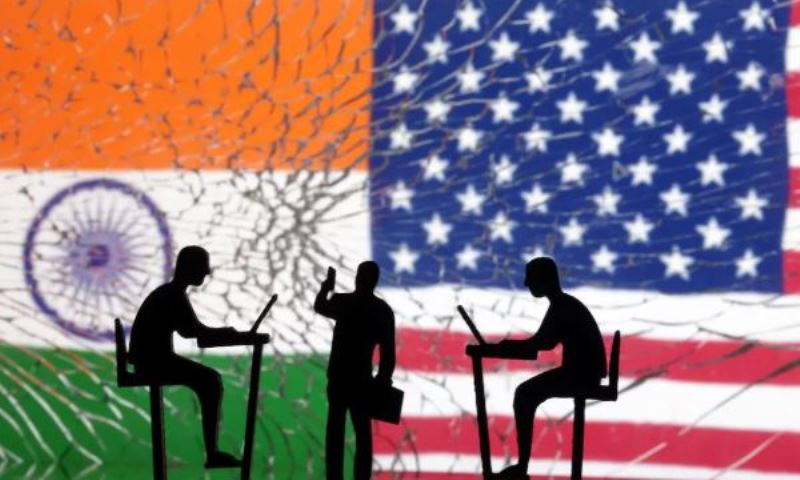
India is intensifying efforts to secure stronger protections for its exporters as it navigates two crucial trade negotiations with the United States and the United Kingdom amid mounting global economic and geopolitical challenges.
This week, New Delhi is hosting separate high-level trade discussions with a US delegation led by chief negotiator Brendan Lynch and UK Business and Trade Secretary Peter Kyle.
UK Trade Pact Faces Early Test
India has warned that it may reconsider certain tariff concessions granted under the India-UK Free Trade Agreement signed last year if British safeguard duties on steel imports, scheduled to take effect next month, are not revised. New Delhi is seeking exemptions for Indian steel exports, arguing that the measures could significantly restrict market access.
Government officials indicated that tariff reductions offered on several British products, including Scotch whisky, could be reviewed if the steel issue remains unresolved. During his visit to New Delhi, Kyle is expected to hold discussions with Commerce Minister Piyush Goyal on accelerating implementation of the trade agreement and addressing India’s concerns over the safeguard measures.
India Seeks Protection from Future US Tariffs
Simultaneously, India is working to conclude a broader trade arrangement with the United States, with a key focus on securing exemptions from potential tariffs arising from ongoing US trade investigations.
Although the two countries reached an interim trade understanding earlier this year, uncertainties remain after the US Supreme Court invalidated President Donald Trump’s reciprocal tariff framework. Subsequently, the Office of the US Trade Representative launched investigations under Section 301 of the Trade Act into several countries, including India, citing concerns related to forced labor and excess industrial capacity.
Indian negotiators have urged Washington to address these concerns through bilateral negotiations rather than unilateral tariff actions. A US trade team is scheduled to begin talks with Indian counterparts in New Delhi from Tuesday.
Geopolitical Risks Add Urgency
The negotiations come as India faces growing trade disruptions stemming from the conflict involving Iran and the resulting challenges to shipping movements through the Strait of Hormuz. The disruption has affected both energy supplies and access to important export markets in the Gulf region.
Trade agreements with the US and UK are viewed by policymakers as critical tools to offset these headwinds, attract foreign investment, support the rupee, and diversify India’s export destinations amid increasing geopolitical uncertainty.
Experts Advise Caution
However, some trade experts believe India should avoid rushing into a comprehensive agreement with Washington. Ajay Srivastava, founder of the Global Trade Research Initiative, argued that the urgency for a deal has diminished following the US Supreme Court’s ruling against reciprocal tariffs.
According to Srivastava, a bilateral trade agreement would not necessarily shield India from future US trade actions, suggesting that New Delhi may benefit from waiting for greater clarity and stability in American trade policy before committing to long-term obligations.
As negotiations progress this week, the outcome of discussions with both Washington and London could play a significant role in shaping India’s trade strategy and export competitiveness at a time of heightened global economic uncertainty.