
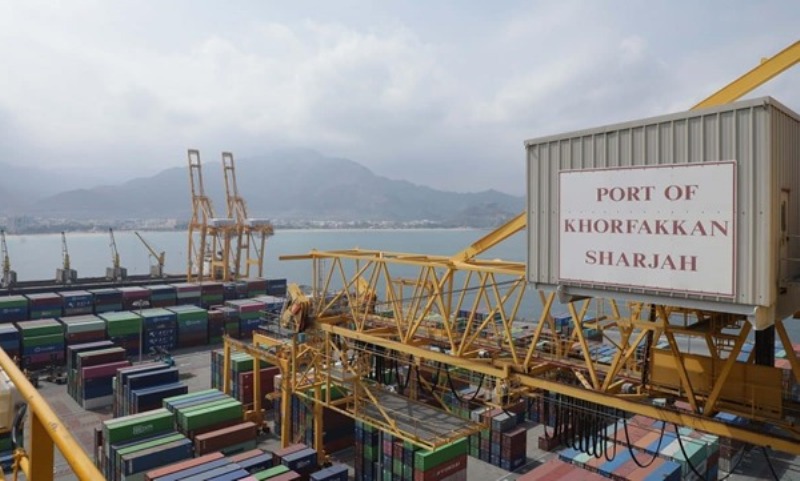
Khorfakkan Port has strengthened trade connectivity between Pakistan and the United Arab Emirates with the launch of a new feeder shipping service designed to improve cargo flows, shorten transit times, and enhance regional supply chain efficiency.
The new service links Pakistan’s key ports with Khorfakkan Port, one of the Gulf’s leading transshipment hubs strategically located outside the Strait of Hormuz. The connection is expected to support growing bilateral trade volumes by providing more frequent sailings and faster onward access to Middle East, Africa, and global markets.
For Pakistan exporters, the feeder route offers improved access for textiles, agricultural goods, and manufactured products, while UAE importers gain more reliable inbound links for consumer goods and industrial cargo. Shipping lines and logistics providers are also expected to benefit from stronger schedule reliability and better network flexibility.
Khorfakkan Port’s advanced infrastructure, deep-water berths, and efficient handling capabilities make it a vital gateway for regional trade. The additional Pakistan linkage further reinforces its role as a preferred hub for transshipment and cargo redistribution across South Asia and the Gulf.
Industry observers say the new feeder service reflects rising demand for diversified shipping routes and resilient logistics networks, particularly as regional trade patterns continue to evolve.