
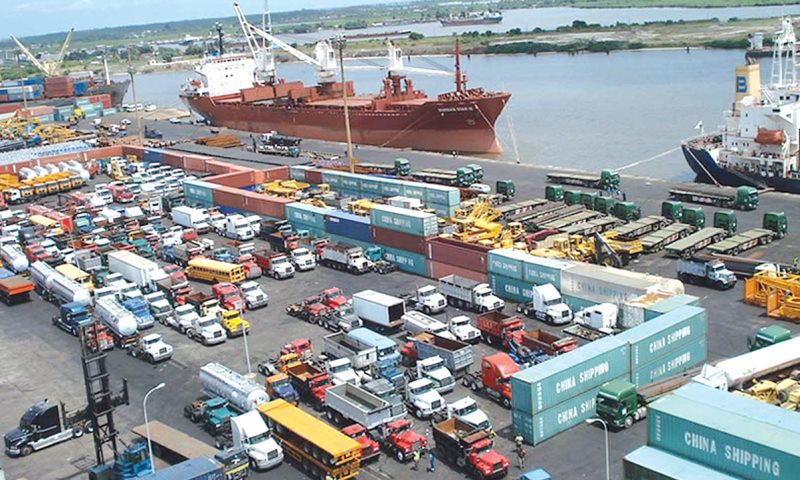
Lagos ports are experiencing a moderate yet steady flow of vessels in last week. This is notwithstanding various challenges, including fluctuations in the foreign exchange market and operational bottlenecks.
Checks of the Nigerian Ports Authority’s (NPA) Daily Shipping Position at the weekend also lend credence to a boom in maritime activities at the Lagos ports.
According to the NPA documents, port operations reveal a mixed outlook, with both active berthing and vacant slots at several terminals, signalling shifting patterns in cargo throughput.
At Apapa Bulk Terminal Limited (ABTL), two bulk carriers, African Lily (175 metres, IMO: 9666443) and Desert Faith (199.98 metres, IMO: 9942067), discharged wheat on March 31 and March 28, respectively. These vessels, with Estimated Times of Departure (ETD) of April 3 and April 9, carried between 30,000 to 45,000 metric tonnes of bulk wheat per shipment. However, three berths at ABTL remained vacant, highlighting a temporary drop in bulk import volumes.
Terminal A also witnessed heightened activity in the bulk commodity segment, with the arrival of three vessels. Oceanlove (190.01 metres), managed by Jfdor International, berthed on April 3, discharging a cargo of bulk sugar. On the same day, Desert Ranger (193 metres), operated by Eagle Flour Mills Shipping, also arrived at the terminal with a shipment of bulk wheat. Earlier, on March 31, Haci Huseyin (154.5 metres), arrived in ballast under the management of Ocean Glory Commodities, indicating it was not carrying cargo at the time of berthing.
At ENL Consortium’s terminal, a hub for both general and refrigerated cargo, at least four vessels were actively engaged in discharge operations.
Gogland Reefer (140 metres), which berthed from March 28 to April 5, offloaded an estimated 8,000 to 12,000 metric tonnes of frozen fish for Africa Atlantic. Pamyat Ilicha (152.87 metres), also carrying frozen fish, berthed on April 1 under Samcham Holdings, and is scheduled to depart on April 8. Both indicated continued demand for food imports.
Meanwhile, two vessels with consignments of general cargo, Tian Tai Shan (199.9 metres), under the agency of Alraine and Cheval Blanc (190 metres), managed by GMTS berthed on March 19 and 13 respectively; and are both expected to depart on April 5.
Despite these activities, five berths at ENL remained vacant, reflecting only moderate throughput.
E/SUP terminals saw Xin Hai Tong 55 (189.99 metres) berthed on March 24 also under Alrainewith general cargo, due to depart April 10. HG Melbourne had departed earlier on March 25, signalling short turnaround schedules.
Container operations at APMT terminals remained steady, with three notable vessels berthing between April 1 and 3. These included GSL Valerie (221 metres), represented by Lansal; Maersk Cabinda (249.12 meters), operated by Maersk Nigeria Ltd; and Hedwig Schulte (275 metres), under the agency of CMA CGM Delmas Nigeria Ltd. The arrival of these container vessels, as indicated by the report, reflect continued container throughput despite some fluctuation in vessel calls. With steady consumer demand and industrial imports, containerised cargo appears to remain resilient amidst economic pressures.
Similarly, at Terminal B, Shekou Star (260 metres) container vessel, berthed April 4 under Hapag-Lloyd, to depart on April 5 while MSC Denmark VI (278 metres) also a container vessel was in port from April 2–4 via Mediterranean Shipping Company.
At Terminal C, Maersk Durban (207.5 metre) arrived April 2 in ballast; Almeria (189.99 metrea), managed by GMT Shipping, had departed March 27 after delivering general cargo.
At KLT-BESTAF FZE, MSC SUN F (143.11m) berthed April 2 and was due to depart April 5, managed by MSC. This terminal showed less activity compared to March, which typically featured 10–12 weekly container vessel calls.
Fuel import terminals remained active during the period, reinforcing resilience in the country’s downstream energy sector. At the Ibafon terminals, Ashabi (164.5 meters), carrying Automotive Gas Oil (AGO), and LAUSU (176 meters), laden with Premium Motor Spirit (PMS), arrived between April 1 and 2 under the management of Integrated Shipping and West Atlantic Port Services, respectively.
Also on April 1, PTI Nile (183.03 metres) with ETD on April 5, berthed at Menj Oil, discharging PMS via Integrated Shipping. Meanwhile, at AA Rano and Emadeb terminals, African Marvel (155 metres, IMO: 9856658) and Ellie M II (183 metres, IMO: 9307994) offloaded PMS and a dual cargo of AGO and Aviation Turbine Kerosene (ATK), respectively. Both vessels berthed on April 3 and scheduled for departure on April 7 and 6 respectively.
These vessels, which typically carry between 20,000 to 40,000 metric tonnes of refined products, underscore a consistent supply effort despite prevailing macroeconomic headwinds.
At ASPM Jetty, TORM DAMINI (183m) berthed March 30, departing April 3 after discharging PMS, signalling continuity in fuel supply despite foreign exchange pressures.
Meanwhile, more than 25 terminals and jetties recorded berth vacancies, including ASPM Jetty, Atlas Cove, Delmar Jetty, Ladol, Capital Oil, Dee Jones, OBAT, Bovas, and KLT Phases 1–3 even as maritime analysts attribute this to vessel rescheduling, import delays, and softer demand for oil and gas products.
Compared to the average of 25–30 active vessels per week recorded in February and early March, early April saw a slight decline, with approximately 18–20 vessels reported across all terminals. Container traffic held firm, but bulk and petroleum-related calls showed noticeable dips, echoing industry commentary on foreign exchange volatility and import order slowdowns.
Shipping agents and port officials continue to monitor market trends, especially as forex challenges persist.
An operations manager at a Lagos-based shipping agency, Adewale Musa, noted that: “We’re seeing fewer vessel calls, especially for bulk food items, due to importers recalibrating their strategies. However, container traffic remains steady, thanks to demand for fast-moving consumer goods.”
A port official who craved anonymity explained that berth vacancies should not be viewed negatively.
“It’s often a result of scheduling gaps or rescheduled arrivals. The bigger picture is that turnaround time has improved due to automation and reforms implemented by terminal operators,” he stated.
Looking ahead, maritime analysts remain cautiously optimistic about the sector’s prospects. They point to developments like the Port Community System (PCS) and the planned deep seaport developments at Lekki and Ibom as pivotal to easing congestion and enhancing cargo flow.