
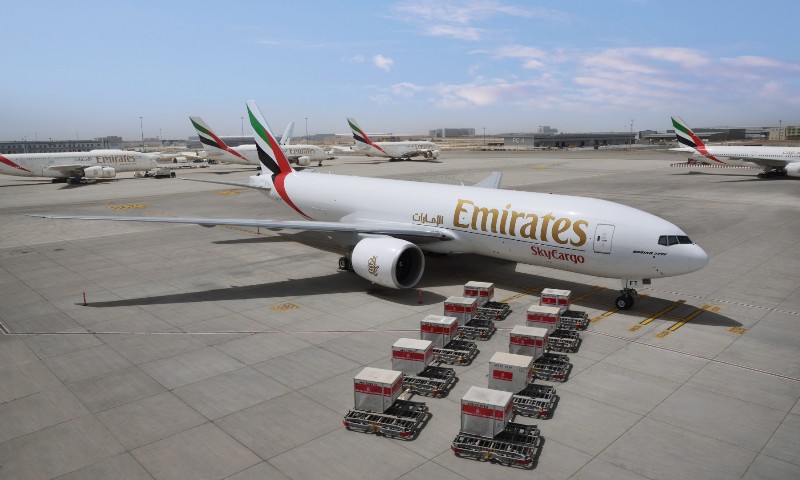
Airlines based in the Middle East are expected to absorb nearly half of all newly delivered global air freight capacity in the coming years, reinforcing the region’s growing dominance in long-haul cargo operations.
Major operators including Emirates SkyCargo, Qatar Airways Cargo and Etihad Cargo have continued to expand their freighter fleets and widebody belly-hold capacity, capitalising on their strategic geographic location between Asia, Europe and Africa.
Industry forecasts indicate that a significant portion of upcoming widebody freighter deliveries and passenger aircraft conversions will be allocated to Gulf carriers, driven by sustained demand for e-commerce, pharmaceuticals, perishables and high-value industrial shipments. The region’s hub-and-spoke model, supported by world-class airport infrastructure, enables efficient transshipment across major global trade lanes.
Analysts note that Middle Eastern airlines have leveraged strong balance sheets and long-term fleet planning to secure early delivery slots for new-generation freighters, including factory-built and converted aircraft. Investments in digital cargo platforms, cold-chain facilities and specialised handling capabilities have further strengthened their competitive position.
The anticipated influx of capacity is expected to consolidate the Gulf’s role as a global air cargo powerhouse, with carriers aiming to capture growing trade flows while enhancing network resilience and service reliability across key international markets.