
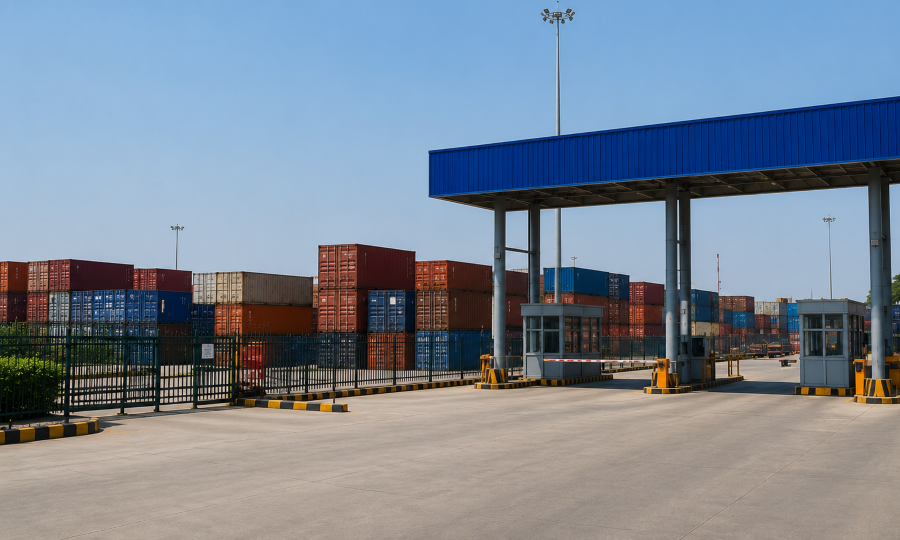
As congestion at Nhava Sheva continues to strain India’s busiest container gateway, the prolonged suspension of one of the port ecosystem’s largest Container Freight Stations (CFSs) is adding further pressure to an already stressed logistics chain, raising concerns across the EXIM community.
The issue stems from a customs suspension linked to three import containers handled during late March and early April 2026. According to sources familiar with the matter, in at least one instance, suspicious activity was reportedly detected by the CFS’s own operational staff during cargo handling, following which authorities were alerted and subsequent action was initiated against those allegedly involved.
The matter has since moved through multiple legal forums. On June 8, 2026, the Customs, Excise and Service Tax Appellate Tribunal (CESTAT) set aside the continuation of the suspension. Customs authorities subsequently challenged the order before the Bombay High Court, which directed that the matter be reconsidered by a newly constituted CESTAT Bench. Pending fresh adjudication, the suspension remains in force.
While the legal process continues, industry stakeholders point to the wider operational consequences. The suspended facility is understood to have a handling capacity of nearly 15,000 TEUs per month and is equipped with dedicated transportation and cargo-handling infrastructure that supports rapid evacuation of containers from the port.
Its continued closure comes at a time when Nhava Sheva is already grappling with congestion-related challenges. Trade participants say the absence of a major logistics facility has contributed to cargo diversions, longer dwell times, increased transportation costs, equipment shortages and operational inefficiencies across the supply chain.
The impact is also being felt on the employment front. More than 800 employees and workers associated directly and indirectly with the facility are reportedly affected by the prolonged shutdown. Many of these workers belong to local communities that depend on the uninterrupted functioning of port-linked logistics operations.
The facility has also been recognised within the industry as India’s first Green Container Freight Station, developed with a focus on sustainable logistics practices. Stakeholders argue that prolonged uncertainty surrounding such infrastructure could have implications for investor confidence in the logistics sector, particularly as India seeks to strengthen its position as a global manufacturing and supply-chain hub.
Industry observers note that suspension is an important regulatory instrument intended to protect investigations and safeguard the integrity of customs processes. However, they also point out that such measures are generally preventive rather than punitive in nature. When a suspension extends over a prolonged period while legal proceedings remain ongoing, questions inevitably arise regarding proportionality, business continuity and the broader impact on legitimate trade.
The case has therefore evolved beyond a dispute involving a single CFS. It highlights the wider challenge of balancing effective enforcement with trade facilitation, employment protection and supply-chain efficiency.
With congestion pressures continuing at Nhava Sheva, stakeholders across the logistics sector are now looking for an early resolution that upholds the rule of law while minimising disruption to trade, employment and critical logistics infrastructure.