
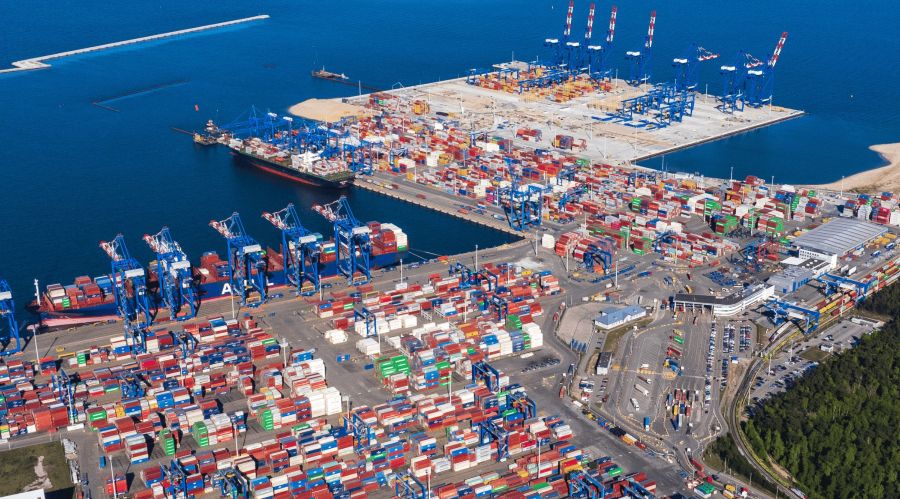
The Port of Gdańsk Authority has signed a 30-year lease agreement with Baltic Hub Container Terminal (Baltic Hub) for a strategically located 27-hectare site adjacent to the terminal’s T2 deepwater facility, marking a significant step in strengthening Poland’s logistics infrastructure.
The agreement, signed on 4 August, follows a competitive tender process and paves the way for Baltic Hub to develop the site into a modern intermodal rail and container handling area. The expansion will substantially increase both landside and quayside capacity while enhancing the port’s role as a key logistics gateway for Central and Eastern Europe.
The new development will focus on improving rail connectivity, enabling a larger share of container cargo to be transported by rail. This is expected to reduce dependence on road transport, improve supply chain efficiency, and contribute to lower carbon emissions through a greater modal shift toward sustainable transport.
Commenting on the development, Jan Van Mossevelde, CEO of Baltic Hub, described the agreement as a major milestone in the company’s long-term growth strategy. He noted that the expansion aligns with PSA Group’s Node to Network strategy, strengthening hinterland connectivity while enhancing operational reliability, capacity, and sustainability for shipping lines and cargo owners.
The project is expected to further consolidate the Port of Gdańsk’s position as one of the fastest-growing container hubs in the Baltic region and support increasing trade flows across Central and Eastern Europe.