
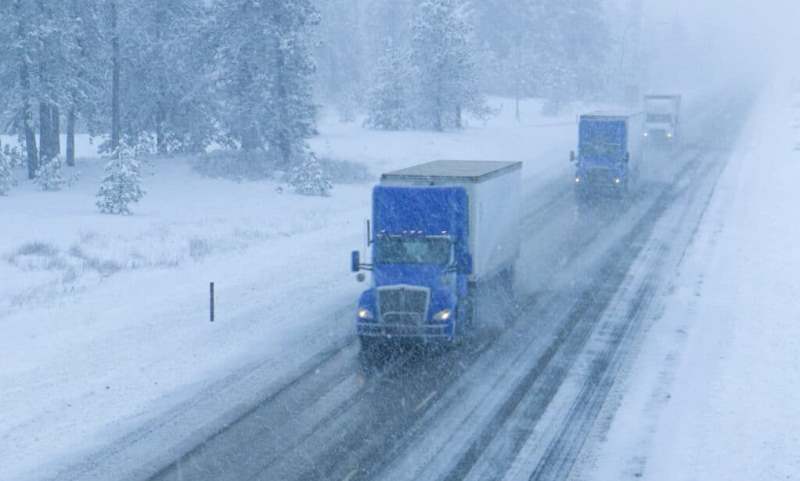
The United States is reeling under the impact of a historic winter storm, leaving significant disruptions in its wake. From grounded flights to immobilized trucks and employees unable to reach their workplaces, the logistics sector has taken a substantial hit. The cascading effects of this severe weather event highlight the vulnerability of supply chains to environmental disruptions, offering critical lessons even for markets as distant as India.
Grounded Flights and Widespread Delays
The storm, described by meteorologists as potentially the heaviest snowfall in over a decade, has grounded more than 1,000 flights and delayed over 3,000 others across key transit hubs in the Midwest. Airports such as St. Louis Lambert International have faced significant cancellations, impacting not just passenger travel but also air cargo operations. The ripple effects of these disruptions are expected to extend well into the week, causing delays in the movement of time sensitive goods.
For businesses relying on just-in-time inventory systems, these disruptions could mean empty shelves and missed production schedules. The situation underscores the need for more robust contingency planning, particularly in regions like India, where logistics often rely on a single mode of transport.
Highway Closures Paralyze Trucking
Highway closures have been a critical bottleneck during this severe winter storm, paralyzing the movement of goods across key regions in the United States.
Major roads like Interstate 70 in Kansas were shut down over the weekend due to dangerous conditions, transitioning from icy surfaces to heavy snow accumulation. These closures were not limited to a few stretches; entire state highways in northeastern Kansas were declared inaccessible, leaving thousands of vehicles stranded. Emergency responders faced immense challenges in reaching motorists due to reduced visibility and worsening weather, further compounding the disruption.
For the trucking industry, which serves as the backbone of freight movement, these closures have halted the delivery of essential commodities, including perishable goods, pharmaceuticals, and industrial supplies. This situation has not only delayed shipments but also created significant logistical challenges, such as rerouting trucks through longer and less efficient pathways. In regions where trucking is the primary mode of transportation, the delays disrupt supply chains downstream, affecting production lines, retail operations, and consumer availability. Such closures expose the vulnerability of over-reliance on road networks, emphasizing the need for investment in alternate routes and resilient infrastructure to withstand extreme weather events.
Labour Shortages and Workplace Disruptions
Governors in states like Kentucky and Missouri have declared emergencies, urging residents to stay indoors. The severe winter storm has created significant workplace disruptions, as hazardous road conditions and emergency advisories have prevented employees from reaching warehouses, distribution centres, and other critical supply chain facilities. With operations coming to a standstill in many regions, tasks such as loading, unloading, and sorting goods have been delayed, creating a cascading effect on overall logistics efficiency. These labour shortages, compounded by halted transportation routes, are likely to result in extensive backlogs. Once operations resume, the pressure to clear delayed shipments and restock shelves will create operational bottlenecks, straining resources and potentially extending recovery times. This highlights the interconnectedness of workforce availability and supply chain fluidity in ensuring timely deliveries.
Lessons for India: Building Resilient Supply Chains
While India does not experience such extreme winter conditions, the lessons from this storm are universally applicable. With its rapid economic growth and an increasing focus on manufacturing under the “Make in India” initiative, India must prepare for disruptions caused by climate change and extreme weather events.
Key takeaways include:
Multimodal Transport Systems: Diversifying between air, road, rail, and sea freight can mitigate risks when one mode is paralyzed.
Technological Integration: Real-time tracking, predictive analytics, and AI-driven logistics planning can enhance responsiveness to disruptions.
Workforce Adaptability: Cross-training employees and leveraging remote management tools can keep operations running during labor shortages.
The Road Ahead
The US winter storm serves as a stark reminder of how interconnected and fragile supply chains can be. For India, it underscores the importance of proactive measures to weather-proof logistics networks, ensuring resilience in the face of unforeseen disruptions. As the global economy becomes increasingly interlinked, the ability to adapt and recover swiftly will be a defining factor for nations aspiring to be global logistics leaders.