
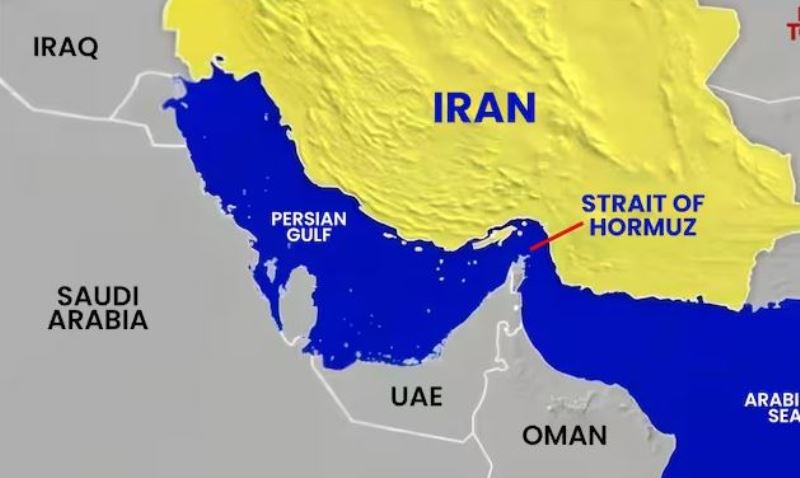
The announcement of a temporary ceasefire between the United States and Iran, along with the reopening of the Strait of Hormuz, has brought immediate relief to Indian exporters by easing shipping disruptions and stabilising freight and insurance costs, the Federation of Indian Export Organisations (FIEO) said on Wednesday.
U.S. President Donald Trump announced a two-week suspension of military strikes against Iran, while Tehran agreed to ensure safe navigation through the vital shipping corridor during the truce. The development triggered sharp movements across global oil, equity and currency markets.
FIEO President S.C. Ralhan said the ceasefire would help ease logistical bottlenecks that had driven up freight rates and insurance premiums in recent weeks. “The ceasefire and reopening of the Strait of Hormuz bring immediate relief to exporters by easing shipping disruptions, high freight rates, and insurance costs,” he noted.
However, exporters remain cautious given the temporary nature of the agreement. “Sustained stability is essential for restoring confidence and ensuring smooth trade flows,” Ralhan added.
The West Asia region remains a crucial market for Indian exports, with bilateral trade reaching $178 billion in 2024–25, including $56.87 billion in exports. The recent conflict had severely disrupted maritime movement following joint military actions by the U.S. and Israel against Iran in late February, impacting both ocean freight and air cargo operations.
The closure of the Strait of Hormuz — a key route for nearly one-fifth of global oil and gas supplies — had led to supply shortages and increased costs worldwide. Exporters faced rising air freight rates, surging insurance premiums, and delays in shipments, particularly affecting sectors such as petroleum products, chemicals, engineering goods, pharmaceuticals, rice, and gems and jewellery.
Government measures introduced to cushion exporters have provided some relief, but industry stakeholders emphasise that long-term stability in the region is critical. Key export destinations in the Gulf — including the UAE, Saudi Arabia, Oman, Bahrain, Qatar and Kuwait — continue to play a vital role, especially for agri-exports like basmati rice, marine products, and fresh produce, where logistics costs had surged sharply during the crisis.
With the temporary truce now in place, exporters are hopeful of a gradual normalisation in supply chains, even as they closely monitor geopolitical developments in the region.