
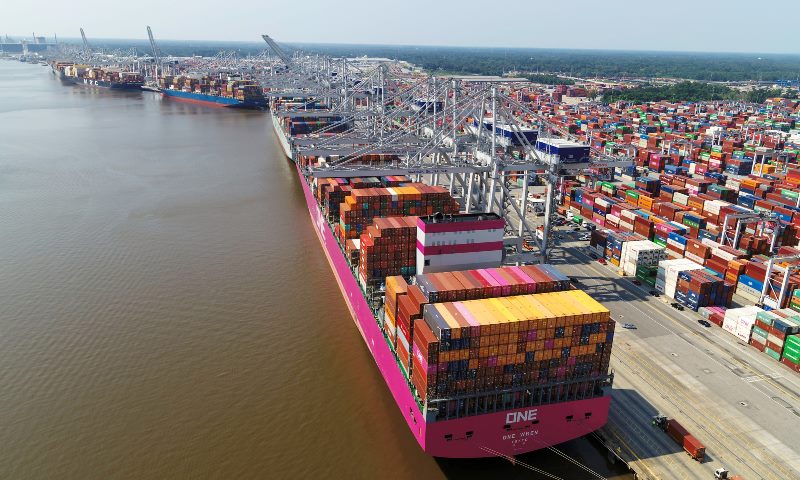
Container imports into the United States have shown signs of easing, as a slowdown in export volumes from China begins to weigh on trans-Pacific trade flows.
Industry data indicates a decline in inbound container traffic at major US ports, driven largely by weaker shipment volumes from China, the country’s largest trading partner. The slowdown reflects softer global demand, cautious inventory management by retailers, and ongoing shifts in sourcing strategies.
Exporters in China are facing a combination of challenges, including subdued consumer demand in Western markets, pricing pressures, and geopolitical uncertainties. These factors have contributed to reduced order volumes and fewer containerised shipments bound for the United States.
Shipping lines have responded by adjusting capacity on key Asia–US routes, including blank sailings and service rationalisation, to better align with demand. Freight rates have also come under pressure as capacity outpaces cargo volumes.
Analysts note that the dip in container traffic could be temporary, depending on how demand evolves in the coming months, particularly ahead of peak shipping seasons. At the same time, diversification of supply chains toward other Asian economies continues to reshape traditional trade patterns.
While the United States remains a key destination for global exports, the current slowdown underscores the sensitivity of container flows to changes in demand and production trends in China.