
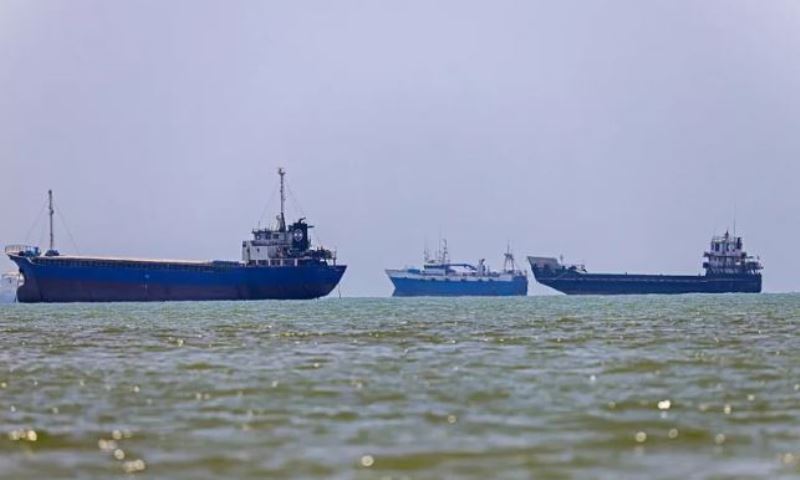
The United States has launched a series of military strikes against Iran following attacks on three commercial vessels transiting the Strait of Hormuz, sharply escalating tensions in one of the world’s most critical maritime trade corridors.
The US Central Command (CENTCOM) confirmed on Tuesday that it had initiated what it described as “powerful” strikes targeting Iranian assets in response to attacks on commercial shipping.
In a statement, CENTCOM said the operation was aimed at imposing “heavy costs for targeting and attacking commercial shipping crewed by innocent individuals in an international waterway.”
The attacks came after three tankers were reportedly struck within a 24-hour period while navigating the Strait of Hormuz. According to the UK Maritime Trade Operations (UKMTO), one tanker suffered an engine room fire after being hit by an unidentified projectile on Monday, while two additional tankers sustained damage on Tuesday. No casualties were reported, and all vessels remained afloat.
US officials accused Iran of carrying out the attacks, calling them “wholly unacceptable” and warning that Tehran would face consequences for threatening international shipping.
Iran Condemns US Action
Iran strongly condemned the US military response, with Deputy Foreign Minister describing the strikes as a violation of the US-Iran Memorandum of Understanding signed just a month ago.
Tehran warned that it would take “decisive measures” to protect its national interests and security.
Adding to the tensions, the US Treasury revoked a sanctions waiver on Tuesday that had temporarily allowed Iran to export oil and petroleum products under the memorandum. The Treasury has provided a wind-down period until July 17 for existing transactions.
Iran’s Foreign Ministry denounced the decision, accusing Washington of acting in “bad faith” and violating the terms of the agreement.
Gulf States Blame Iran
Qatar and Saudi Arabia also accused Iran of targeting their vessels while transiting near the Strait of Hormuz.
Qatar said its tanker Al-Rekayyat was attacked during transit and held Iran “fully responsible,” urging Tehran to stop actions that threaten regional security and global energy supplies.
Saudi Arabia similarly alleged that its tanker Wadyan was struck while crossing the Strait, calling the incident an attack on international navigation and global energy security.
Iran rejected Qatar’s allegations, insisting that vessels not coordinating with Iranian authorities or interfering with ship tracking systems could create navigational risks.
Strait of Hormuz Back in Focus
The latest incidents have once again highlighted the vulnerability of the Strait of Hormuz, through which nearly 20% of the world’s oil and natural gas trade passes.
The waterway had already witnessed heightened tensions after Iran effectively closed the Strait following earlier US and Israeli military strikes. During that period, Tehran asserted greater control over maritime movements by establishing the Persian Gulf Strait Authority to oversee vessel transit and safe passage permits.
The US-Iran Memorandum of Understanding signed last month had extended a ceasefire between the two countries and outlined future discussions involving Iran, Oman and Gulf states on the administration and maritime services in the Strait.
The renewed military confrontation now raises fresh concerns over the security of commercial shipping, energy exports and regional stability, with global shipping markets closely monitoring developments in the strategically important waterway.