
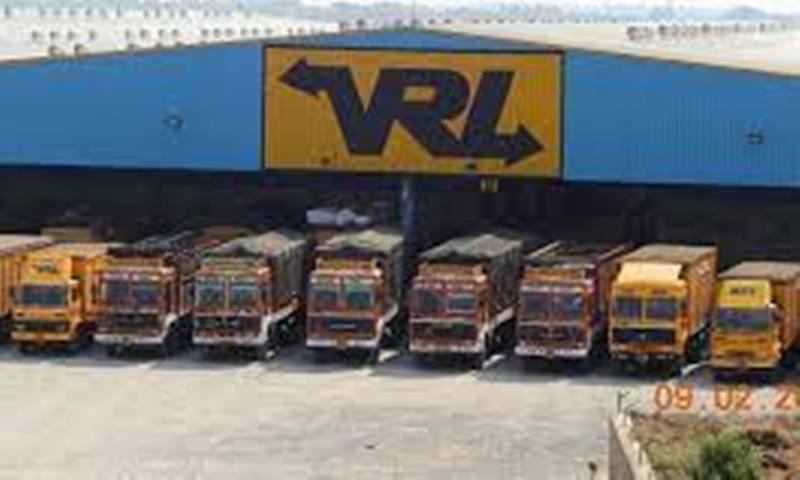
With the transport industry facing severe driver shortage issue, VRL Logistics said it is striving to further encourage more and more individuals to take up driving as a profession. It is doing this by visiting potential villages and towns and trying to remove the stigma associated with the driving profession.
The Hubballi (Karnataka)-based logistics major underscored that the surface transport industry suffers from an acute driver shortage issue and this problem also affects the company.
VRL Logistics’ management, in its latest Annual Report, opined that this is the single most important factor that affects all the transporters across the country.
In April 2025, in reply to a question in the Lok Sabha, Nitin Gadkari, Minister for Road Transport and Highways, quoting a World Bank report, noted that India faced a shortage of 22 lakh skilled drivers.
The total employee strength of the Company as of March-end 2025 was 22,236. Given the nature of operations, a significant portion of the said employee strength comprises of drivers, cleaners, garage mechanics and other unskilled employees.
“To build a strong workforce, we recruit all drivers as full-time employees and provide them with all statutory benefits. Regular training sessions are provided to ensure continuous development. Additionally, we have a driver training facility in Hubballi where drivers can voluntarily attend training programs.
“We impart necessary training to employees of all levels to improve their skills. We have covered our drivers and maintenance workforce under group insurance for ensuring stability to their families,” per the Report.
Vijay Sankeshwar, Chairman and Managing Director, observed that given the inherent nuances of the Surface Logistics Industry in India, VRL Logistics is prone to disturbances presented by unhealthy competition, labour shortages, driver shortages, floods, festivals, processions, external strikes, severe climatic conditions, contradictory state laws, etc.
“We do face and deal with these, then and there, in the most suitable way so as to minimise any adverse impact to business,” he said.
Sankeshwar underscored that his company would approach the impending vehicle capex cautiously and undertake fleet addition selectively over the short term.
Minor fleet addition would still be done given the entry restrictions imposed in key areas such as Delhi NCR, Mumbai Metropolitan Region as also the branch specific needs.
As on 31st March 2025, the Company operated with a total of 6115 owned vehicles having carrying capacity of 85261 tons, and several owned premises, including branches, offices and transhipment hubs.
Sankeshwar noted that during FY25, the company revised its pricing policy and rationalised freight rates across the country.
“The restructured rates resulted in higher freight realisation resulting into higher profitability. At the same time, we have ensured that our policies do not end up being rigid and have implemented a suitable escalation matrix enabled through in-house IT to ensure that senior officials can approve rate concessions on a real time basis to capitalise on business volume opportunities.” he said.
The company operates nearly 1253 branches across the country and its operations are spread. At any given point in time over 7000+ drivers are always on road.
VRL Logistics noted that it has 842 vehicles which are more than 15 years old as of March 31, 2025, with a total capacity of 8331 tons i.e. 9.8% of total capacity & 13.8 per cent of total vehicle count.
The management has, however, ensured that orders for higher capacity replacement vehicles are already put in place.
On the fleet side, VRL said it added 457 vehicles of different capacities in line with its expansion plans to garner more market share and also reduce dependency on third party vehicles.
Net addition post scrappage was 121 Vehicles. Number of vehicles increased from 5944 vehicles in FY 24 to 6115 vehicles in FY25.
In FY25, the company reported about 10 per cent year-on-year increase in revenue at ₹ 3186 crore and net profit jumped 105 per cent yoy to ₹183 crore.