
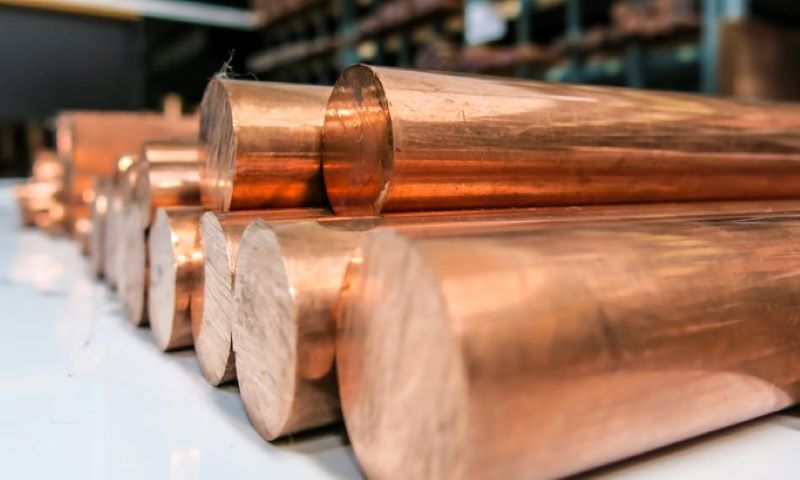
India’s copper demand is projected to increase by approximately 7 percent in the coming years, driven by growing consumption in the renewable energy sector and infrastructure development, according to industry officials.
Policy initiatives including the construction of industrial corridors, housing for all Indians, national highway development projects, and energy transition efforts are key factors stimulating demand for the base metal.
PHDCCI President Hemant Jain noted, “Copper demand is expected to rise by 7 per cent in India in coming years. The copper sector is anticipated to attract private investment, supported by handholding by the government, especially through initiatives such as the PLI and Atmanirbhar Bharat.”
Industry estimates indicate that India’s refined copper production currently stands at around 555,000 tonnes per year, falling short of domestic consumption which exceeds 750,000 tonnes.
To meet local demand, India imports approximately 500,000 tonnes of copper annually. Experts project that copper demand might double by 2030, which would significantly widen the demand-supply gap and increase India’s dependence on foreign sources.
The transition from fossil fuels to renewable energy will require substantial amounts of copper for manufacturing electric vehicles, solar panels, wind turbines, EV batteries, and other green technologies, according to industry experts.
Major domestic conglomerates including JSW Group, Aditya Birla Group, and the Adani Group have committed significant investments in copper production facilities to boost local output amid growing demand for the metal.
Former steel secretary Aruna Sharma observed, “The criticality of copper as an integral part of the country’s decarbonisation strategy is not lost to India Inc. Hence, it is making investments in this mineral, not just to bridge the demand-supply gap but also align its policies with those of the government.”
Sharma added that given copper’s rising cost in recent times, investment in production and smelting also presents a profitable business opportunity.
Industry experts have suggested that the government should consider leveraging the potential of local plants that are currently unused.
The closure of Vedanta’s Sterlite plant at Tuticorin, Tamil Nadu, in 2018 eliminated more than 46 percent of the country’s production capacity for refined copper, transforming India from a net exporter to a net importer of the metal.
Prior to this closure, between 2013-14 and 2017-18, domestic production of refined copper was growing at a compound annual growth rate of 9.6 percent, and India maintained its status as a net copper exporter.