
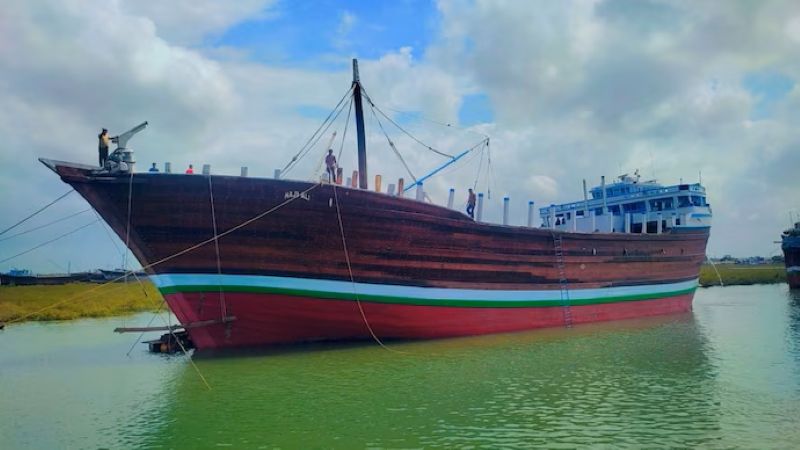
An Indian-flagged wooden cargo vessel, identified as Haji Ali, sank in Omani waters after catching fire in a suspected drone or missile attack, amid escalating maritime security threats linked to the ongoing Iran conflict.
According to India’s shipping ministry, the dhow was sailing from Somalia to the United Arab Emirates when the incident occurred in the early hours of Wednesday. A fire broke out onboard following the suspected strike, eventually causing the vessel to sink.
All 14 crew members were rescued safely by the Omani coast guard and taken to Diba port, the ministry said.
British maritime risk management firm Vanguard stated that the explosion was believed to have been caused by a drone or missile strike. The vessel was reportedly carrying livestock cargo at the time of the attack.
India condemned the incident, calling the targeting of commercial shipping and civilian mariners “unacceptable.”
“The attack on an Indian-flagged ship off the coast of Oman yesterday is unacceptable and we deplore the fact that commercial shipping and civilian mariners continue to be targeted,” India’s foreign ministry said in a statement.
The ministry further reiterated that attacks on commercial vessels and disruptions to freedom of navigation must be avoided.
Ship tracking data from MarineTraffic showed that Haji Ali last reported its position off the coast of Muscat on May 11.
The vessel is the second ship reported sunk in the region since the Iran conflict began on February 28. The conflict has severely disrupted maritime trade in the Gulf region, leaving hundreds of vessels stranded and nearly 20,000 seafarers unable to transit through the Strait of Hormuz.
At least two other Indian-flagged vessels have reportedly come under attack since the outbreak of the U.S.-Israeli conflict with Iran. India had earlier summoned the Iranian envoy to New Delhi to express “deep concern” over the incidents.
The latest development comes as BRICS foreign ministers, including Iran’s representative, convene in New Delhi amid growing concerns over regional stability and maritime security in one of the world’s most critical energy shipping corridors.