
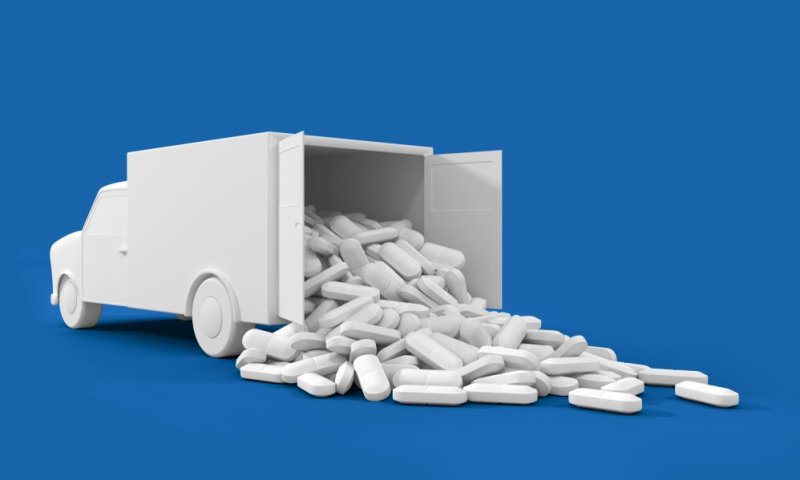
Looming tariffs on imported pharmaceuticals could push up the cost of US drugs by $51bn a year, a report commissioned by the pharma lobby warns.
This would undermine competitiveness for US-produced drugs in international markets, and result in price rises for domestic consumers of up to 12.9%, if fully passed on.
And Johnson & Johnson CEO Joaquin Duato said in an earnings call discussing the firm’s Q1 results that tariffs could create supply chain disruptions.
Ripples of concern had appeared in March, when Lufthansa Cargo reported a marked increase in pharma traffic from Europe to the US.
“Some large pharmaceutical companies with production sites in Europe are increasing their production and accelerating shipments to the US, primarily due to the potential tariff increases,” the carrier reported.
The day before that, media had reported that two drug makers in Europe were busy sending as much of their medicines to the US as possible by air.
Meanwhile, untouched by tariffs unleashed so far by the administration, the US pharma industry sailed through the early turmoil fairly unruffled. A number of large drug manufacturers tabled Q1 results above expectations, and the sector was almost unscathed by the stock market turmoil. At a time when the S&P 500 index had dropped 7.5%, the S&P Healthcare index was down a relatively mild 0.5%.
Behind the scenes, however, boardrooms were bracing for tariffs on US imports. Those fears were confirmed in mid-April, when filings in the Federal Register showed the administration moving ahead with probes into imported pharmaceuticals and semiconductors, and opened a 21-day period for public comments
Probes filed invoking Section 232 of the Trade Expansion Act of 1962 have to be completed within 270 days.
The impact of tariffs on pharma companies would be considerable. Merck forecast a $200m hit from tariffs, while Johnson & Johnson expects a $400m impact on its business this year.
According to the study commissioned by the Pharmaceutical Research and Manufacturers of America lobby group, and produced by Ernst & Young, imports into the US reached $203bn in 2023, with 73% shipped from Europe. About 30% of the imports were ingredients for pharma manufacturing, while around 25% of US drug output was exported.
So far, the US government has rebutted pharma sector warnings on the repercussions of tariffs, emphasising the strategic importance of creating self-sufficiency in vital drug production to cope with emergencies.
For the long term, the industry appears poised to meet Washington’s objectives, with large players pledging huge investments in new US production facilities. Eli Lilly intends to invest $27bn in new US factories over the next five years, while Johnson & Johnson plans to inject more than $55bn over the next four years into US locations.
These plans suggest supply chains will undergo change, with diminished flows into the US from overseas.
Pharma giants like Roche are pushing for exemptions from tariffs for the drug production materials they ship to the US, arguing that they are offset by American exports of finished products; but for the most part, the industry appears resigned to the prospect of tariffs on imports.
Some of the lobbying effort has focused on trying to get the administration to phase-in tariffs, to reduce the full impact and allow them time to move production to the US. But there is a chance that shifting production to existing and new facilities in the US may take longer than anticipated.
The efforts of health and human services secretary Robert Kennedy to restructure his realm include a push to slash 3,500 positions in the Food and Drug Administration (FDA), which has raised concerns that this could slow down regulatory review of treatments and vaccines. The FDA missed a 1 April deadline for a decision on a new Covid-19 vaccine.