
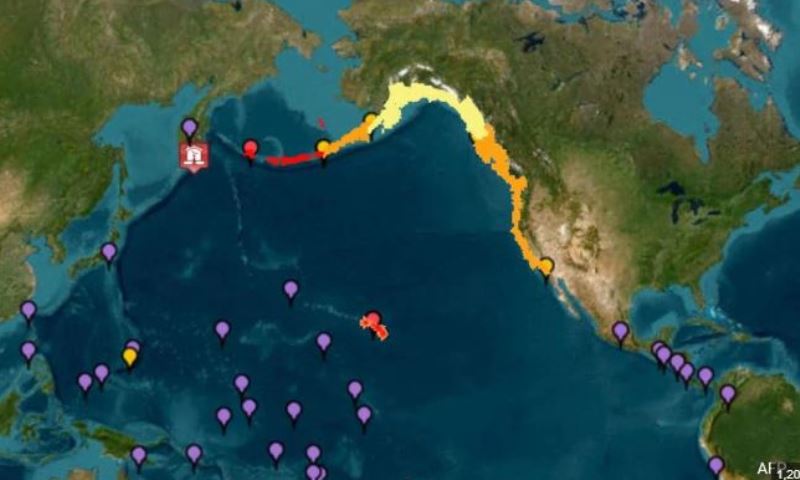
A powerful magnitude 8.8 earthquake struck off Russia’s Kamchatka Peninsula, triggering tsunami warnings that significantly affected port operations across the Pacific Rim.
The earthquake has led to evacuations, damage, and operational challenges for several key maritime hubs.
The US Geological Survey located the quake close to Petropavlovsk-Kamchatsky, a vital Russian Far East port, where tsunami waves of up to 5 metres caused inundation and damage.
Severo-Kurilsk and other Russian coastal ports reported flooding and disruptions, impacting cargo handling and vessel movements.
Following the tsunami alerts, port authorities across the Pacific – including in Hawaii, Japan, Alaska, and parts of the US West Coast – implemented emergency protocols.
Ports in Hawaii activated evacuations and suspended operations due to incoming waves reported between 10 and 13 feet.
Major harbours closed temporarily to safeguard infrastructure, with vessel traffic halted, delaying shipments and cruise schedules.
In Japan, ports from the northern island of Hokkaido downwards followed evacuation directives affecting millions, with waves recorded at around 3 feet. According to media, these disruptions affected loading and unloading activities and led to increased safety inspections following the alerts.
On the US West Coast, while most tsunami wave heights were low, ports such as Crescent City, California, faced potentially dangerous swell amplifications with waves forecast up to 29 feet.
As a precaution, local authorities advised marinas to suspend operations and requested vessels to shelter in safer waters, causing short-term logistical bottlenecks.
Alaska’s extensive coastal ports, spanning the Aleutian Islands to southern communities, also managed phased evacuations and precautionary closures as waves arrived over several hours, impacting fishing fleets and transport services.