
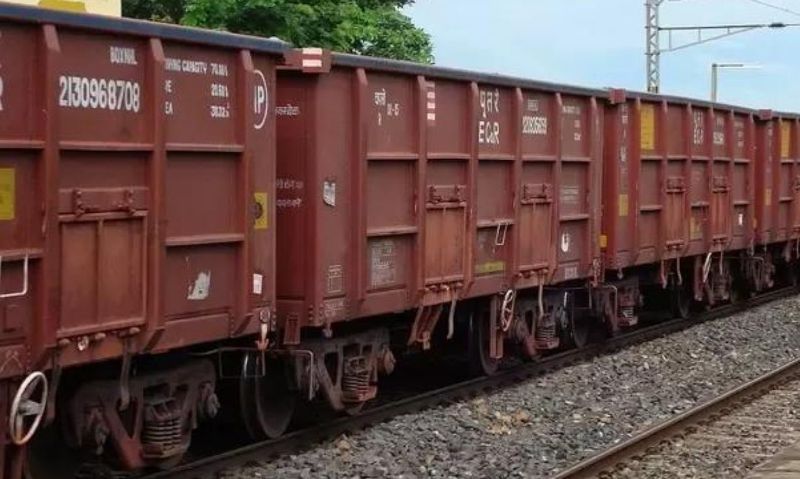
India’s freight wagon market is set to nearly double by 2031, reaching ₹250–300 billion from the current ₹120–140 billion, according to a report by SMIFS. The surge will be powered by rising freight demand, exports, and the adoption of advanced technologies.
The report estimates a compound annual growth rate (CAGR) of 10–12% over the next six years. As of 2025, the market stands at ₹120–140 billion, supported by large-scale procurement by Indian Railways (IR) and increasing private sector participation.
The government is leading a massive transformation drive in the railways, aiming to raise its freight share from 27% to 45% by 2030 and double freight volumes to 3 billion tonnes by the decade’s end. Key enablers include dedicated freight corridors, advanced signalling systems, track modernization, and upgraded stations.
In FY24, IR added 5,300 km of new tracks, improving its pace of construction to 14.5 km per day from just 4 km per day in 2015. For FY25, it targets 5,500 km, with 3,433 km already commissioned between April and December 2024. Over the next five years, the Railways plans to add 25,000 km of new tracks, while upgrading 23,000 km of existing lines to support speeds of up to 130 kmph.
SMIFS highlighted that this expansion will require a significant boost in wagon capacity. High-capacity, technologically advanced wagons will be essential to handle bulk commodities efficiently, reduce turnaround times, and cut logistics costs. Alongside expansion, Indian Railways is modernizing its maintenance infrastructure, replacing outdated wagons, and strengthening IT systems.
With these measures, the freight wagon sector is expected to emerge as a cornerstone of India’s logistics transformation, helping the country meet its ambitious freight mobility targets.