
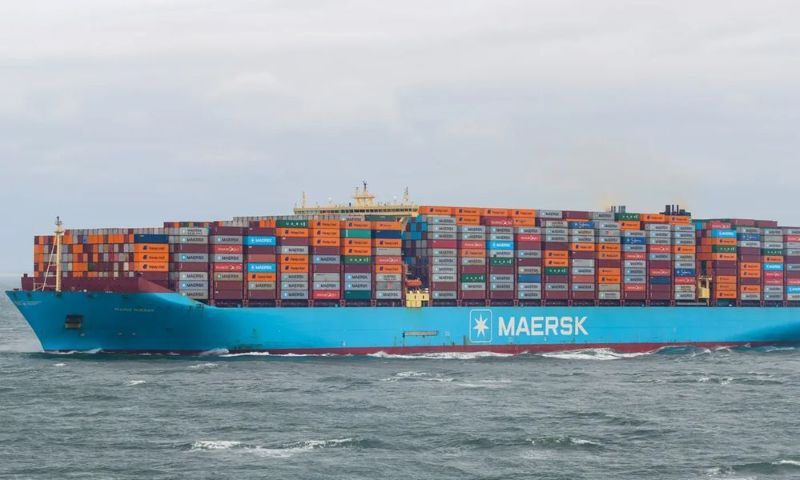
Maersk has climbed the ranks of the intra-Asia trades to challenge long-time leader COSCO, according to new figures released by Alphaliner.
The Danish shipping giant has added an extra 100,000 teu of capacity on intra-Asia routes over the past 12 months. This expansion brings Maersk within just a few thousand slots of China’s COSCO, the current market leader in the region.
Maersk’s Gemini Cooperation partner, Hapag-Lloyd, also posted strong gains, nearly doubling its capacity compared with August 2024.
“The main driver for the substantial growth of both carriers is the formation of the Gemini Cooperation, which saw the lines operate significantly more regional shuttles in Asia to cater to its ‘hub and spoke’ concept,” Alphaliner noted in its latest weekly report.
In terms of percentage growth, Singapore-based Pacific International Lines (PIL) led the field with a remarkable 116% increase in capacity.
The intra-Asia trades — connecting China, Japan, Korea, ASEAN, and the Indian subcontinent — remain the world’s largest container shipping market, surpassing even the transpacific and Asia–Europe lanes. Annual volumes are estimated at over 60 million teu, compared with 25–30 million teu on the transpacific and 24–26 million teu on Asia–Europe.
Looking forward, the market shows no signs of slowing. ASEAN’s combined GDP is expected to outpace global growth, India is emerging as a key manufacturing and consumption hub, and China’s evolving role as both exporter and importer continues to fuel demand. Analysts predict intra-Asia volumes could climb to 80 million teu within the next decade.