
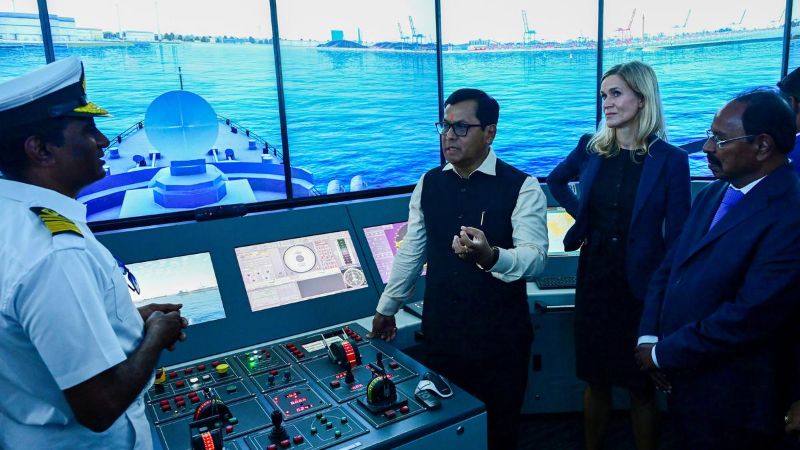
Union Shipping Minister Sarbananda Sonowal on Tuesday chaired a high-level review meeting and directed officials, including the Directorate General of Shipping (DG Shipping), to take immediate steps to safeguard Indian seafarers and secure maritime assets amid escalating tensions in West Asia.
According to DG Shipping, there have been no confirmed instances of casualty, detention or boarding involving Indian-flagged vessels. However, officials briefed the minister that 24 Indian ships are currently stranded west of the Strait of Hormuz, while another 14 remain east of the strait.
DG Shipping reported four incidents involving Indian seafarers aboard foreign-flagged vessels, resulting in three fatalities and one injury.
Since the conflict began, at least five tankers have been damaged and nearly 150 vessels are stranded around the strait, disrupting global shipping movements.
The tensions have prompted several container lines to suspend services to West Asia and reroute vessels via the Cape of Good Hope, avoiding the Suez Canal route. While long-haul services to the US, Europe and the Mediterranean continue, rerouting has increased transit times and operational costs.
Sunil Vaswani, Executive Director of the Container Shipping Lines Association (India), said services to West Asia have been temporarily suspended for safety reasons. “Services to long-haul destinations will continue. Those going through Suez have rerouted through the Cape of Good Hope. Transit time will be longer but safer,” he said, adding that deploying additional vessels on longer routes will escalate costs.
The immediate impact is being felt at Indian ports, where cargo congestion is mounting. Around 1,000 containers are currently stuck, with ports coordinating closely with shipping lines to manage loading and unloading operations.
Industry sources said vessels bound for Gulf destinations are being terminated at ports such as Fujairah, Sohar and Khor Fakkan, from where cargo is transported onward by land. Exporters have also been hit, with nearly 150 containers of perishable goods — including bananas, pomegranates, watermelons and onions — reportedly stranded due to the disruption.