
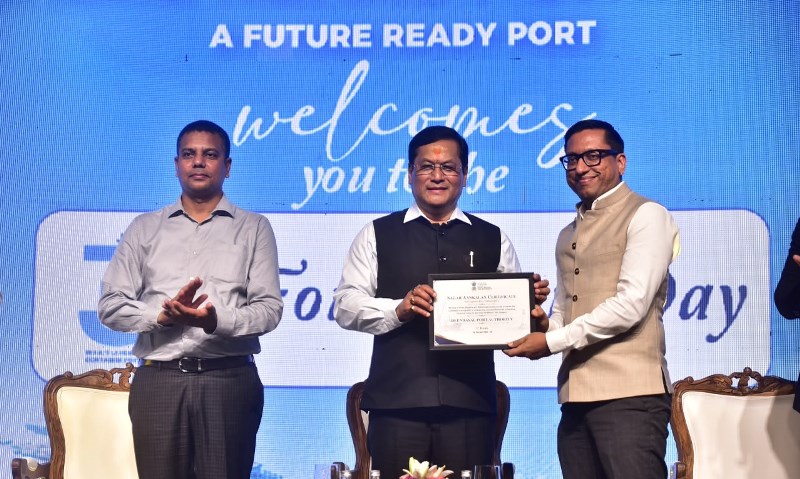
Union Minister for Ports, Shipping and Waterways, Sarbananda Sonowal, announced the launch of the Ship Recycling Credit Scheme, a key component of the Government’s ₹70,000-crore maritime development package unveiled in 2025. The scheme aims to boost sustainable ship recycling and domestic shipbuilding by incentivising vessel owners to recycle ships at environmentally compliant facilities in India.
Under the scheme, ship owners who recycle their vessels at Indian ship recycling yards compliant with the Hong Kong International Convention for the Safe and Environmentally Sound Recycling of Ships will receive a credit note equivalent to 40 per cent of the vessel’s scrap value. The credit can be redeemed against new shipbuilding projects undertaken in India, encouraging both green recycling practices and indigenous shipbuilding.
Speaking at an event marking the 37th Foundation Day of the Jawaharlal Nehru Port Authority (JNPA), Sonowal also praised the port’s outstanding performance during FY 2025-26. JNPA crossed the milestone of 8 million TEUs and handled more than 102 million metric tonnes of cargo, reinforcing its position as one of India’s leading maritime gateways.
“Over the last 37 years, JNPA’s journey has mirrored the transformation of India’s maritime sector itself—from a conventional port ecosystem to a globally competitive logistics and trade gateway. Today, with the Modi Government’s sustained efforts to modernise, mechanise and digitise our ports, JNPA stands as a symbol of India’s growing economic strength and its renewed position as a key global player with strong maritime capability,” Sonowal said.
The Minister highlighted several technology-driven initiatives launched at the port, including the indigenous Vessel Traffic Service (VTS), the AI-powered tender evaluation platform NIVIDA, and multiple strategic Memorandums of Understanding (MoUs), reflecting JNPA’s commitment to innovation, sustainability and operational excellence.
“Under the dynamic leadership of Prime Minister Narendra Modi, as India expands its participation in global trade and emerging economic opportunities, our ports must continue to embrace technology, efficiency and sustainability. The reforms launched today will further strengthen India’s maritime ecosystem and support our vision of becoming a global maritime powerhouse,” he added.
Among the top performers recognised during the event, Paradip Port Authority led the Dry Bulk Cargo category by handling over 5 million tonnes, while Sikka Port and Terminals topped the Liquid Bulk Cargo segment. Mundra Port emerged as the highest-ranked port in the Container Cargo category, handling more than 0.5 million TEUs, with JNPA securing the second position among major container ports.
Highlighting India’s growing stature in global logistics, Sonowal noted that the country’s ranking in the World Bank’s Logistics Performance Index improved significantly, moving from 44th to 22nd place in the International Shipments category. He further pointed out that seven Indian ports were featured among the world’s top 100 ports in the World Bank’s Container Port Performance Index 2024.
The event was attended by senior officials from the Ministry of Ports, Shipping and Waterways, the Directorate General of Shipping, Mumbai Port Authority, JNPA, and representatives from the maritime, logistics and trade sectors.