
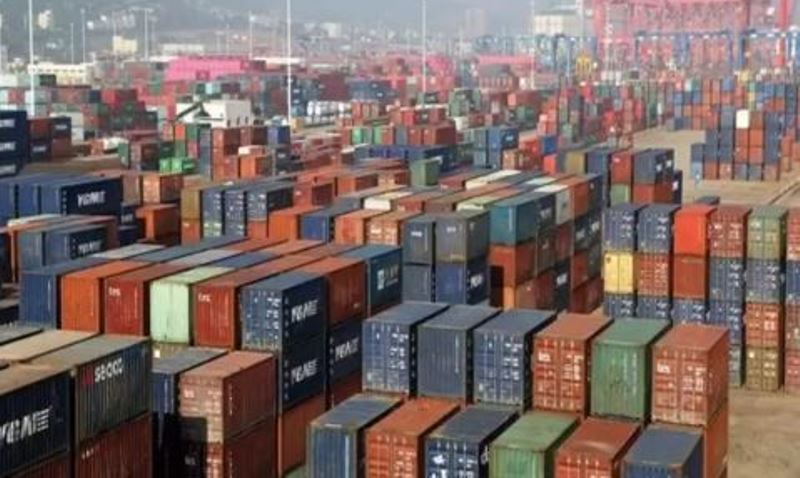
India can save nearly ₹20,000 crore in cargo handling costs at its ports by embracing artificial intelligence (AI), said Gourav Vallabh, Member of the Economic Advisory Council to the Prime Minister, while addressing the session “AI-Powered Ports: Reimagining Efficiency and Operations” at the AI Impact Summit on Tuesday.
Vallabh said that beyond the one-time savings in cargo handling, India could reduce annual logistics costs by up to ₹15,000 crore through AI-led optimisation. “The question is not whether AI will transform India’s ports; the question is whether we are going to lead it or not,” he remarked.
Highlighting that India’s logistics cost stands at 7.97 per cent of GDP — already competitive by global standards — he said that to achieve the Viksit Bharat 2047 vision, ports must evolve into intelligent ecosystems backed by advanced digital infrastructure. He called for accelerated policy initiatives to further reduce logistics costs and enhance efficiency.
Vallabh noted that nearly 95 per cent of India’s trade by volume is transported through maritime routes. Despite an annual growth rate of 13.5 per cent, he observed that Indian ports still lag behind the world’s largest ports in terms of handling capacity. “The gap is both in infrastructure and intelligence,” he said, outlining multiple areas where AI can enhance operational performance.
Sharing industry perspectives, Subrat Tripathy, President – Business Development at Adani Ports and Special Economic Zone Ltd, proposed the idea of a “virtual concierge” platform for ports. The AI-powered system would streamline non-human interactions among vessels, agents, transporters and other stakeholders. “This is not about replacing human beings, but creating a tool that integrates the multiplicity of interactions on a single platform,” he said.
Tripathy added that AI can significantly enhance weather prediction, navigation planning and operational safety at ports.
Echoing the transformational potential of AI, Susanta Kumar Purohit, Chairperson of VO Chidambaranar Port Authority, described AI as “a structural shift in how we plan, operate and govern maritime infrastructure,” rather than just a technological upgrade.
Addressing the regulatory dimension, Aprajita Rana of AZB & Partners stressed the importance of establishing AI governance mechanisms within the industry. She underlined the need for clear standards governing deployment, data safety, authenticity and functionality of AI systems in maritime operations.
The discussions underscored that while India’s port sector is witnessing steady growth, the integration of AI-driven solutions will be critical to bridging infrastructure gaps, enhancing competitiveness and positioning the country as a global maritime leader.