
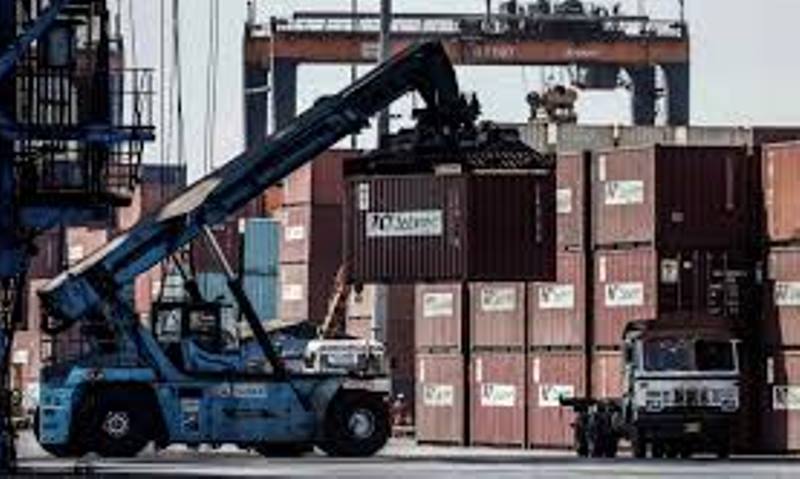
U.S. imports of goods from Asia shrank in September as President Donald Trump’s tariffs weighed on transpacific trade, according to U.S. trade data.
The goods trade deficit with Asian nations narrowed 5.3% from August to $61 billion, while the global goods deficit widened as higher imports from the EU, Mexico and Canada offset the slowdown in Asia.
The combined goods-and-services deficit narrowed to $52.8 billion, driven by non-monetary gold exports and a modest rise in financial services.
Imports from China fell $4 billion to $11.4 billion, while U.S. exports to China rose $200 million, with negotiations ongoing.
Imports from Southeast Asia, including Vietnam, Thailand and Indonesia, grew slightly after the announcement of new tariff rates.
The data reflects Trump’s “reciprocal” tariffs effective since August; some smaller Southeast Asian economies faced 40% levies, still below the 49% levels signaled in April, prompting firms to delay shipments.
U.S. goods exports increased $8.8 billion to $187.6 billion, supported by gold and oil demand. Imports of U.S. pharmaceutical goods nearly doubled to more than $28 billion.
“Without a massive $12.9 billion resurgence in pharmaceutical imports, goods imports would have hit a two-and-a-half-year low,” said Paul Ashworth of Capital Economics, noting the rise may reflect Trump’s threat of tariffs on branded drugs, a measure not implemented .
The report was delayed by a 43-day federal government shutdown and underscores volatility tied to shifting tariffs.
Average U.S. consumer tariff exposure reached 16.8%, according to Yale University’s Budget Lab. Japan and South Korea secured lower rates than initially announced, while India faces 50%, Taiwan 20%, and China (including Hong Kong and Macao) 47.5% after an October adjustment.
Although U.S. measures curtailed Chinese shipments to the U.S., China expanded exports elsewhere and lifted its annual trade surplus above $1 trillion, according to official Chinese data.
The durability of U.S. tariffs remains uncertain as the Supreme Court reviews their legality under the 1977 International Emergency Economic Powers Act.