
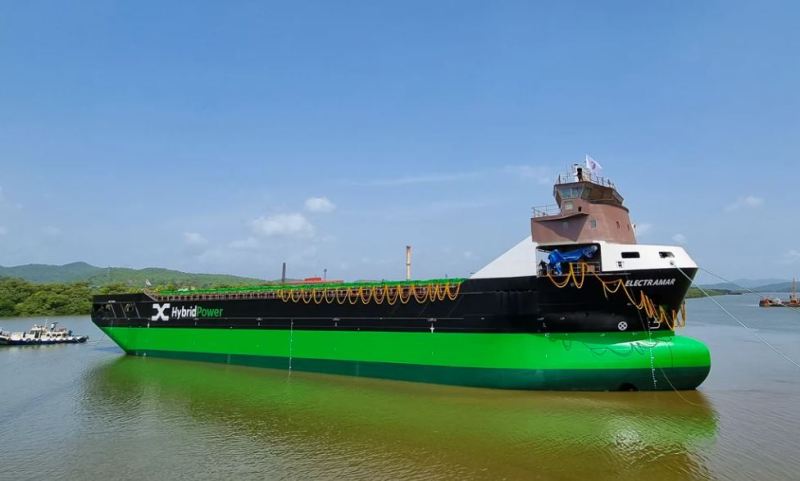
The third plug-in hybrid vessel ordered by AtoB@C Shipping, a Swedish subsidiary of Finland-based shipping company ESL Shipping, has been launched in India.
The launching ceremony for the 5,350 dwt Ecomar took place at Chowgule Shipyard on January 18, 2024.
The outfitting, including the final painting, will continue at the outfitting quay.
The launch of the 90-meter-long general cargo vessel paves the way for the final block assembly of the fourth vessel, Aquamar. The hull blocks of the vessel will be moved to the slipway for final assembly in the coming weeks, according to AtoB@C Shipping, which has been part of ESL Shipping since 2018.
“Demand for this vessel type from both existing and new clients has been high and we are eagerly waiting for the next vessels to enter service”, Frida Rowland, Commercial Director at AtoB@C Shipping, said.
Ecomar is expected to be delivered during the second quarter of this year.
Currently, the shipyard has seven vessels under construction in different stages. The construction of the eighth vessel in the series commenced on December 29 with the steel-cutting ceremony. The order consists of twelve vessels, with the last delivery expected in the second quarter of 2026.
Last month, AtoB@C Shipping took delivery of Electramar, the first vessel from the batch.
The new hybrid vessels reduce CO2 emissions by up to 50% compared to the present generation of vessels. Shore power connectivity and a large battery installation provide superior fuel efficiency and the possibility to minimize noise and emissions while in port.