
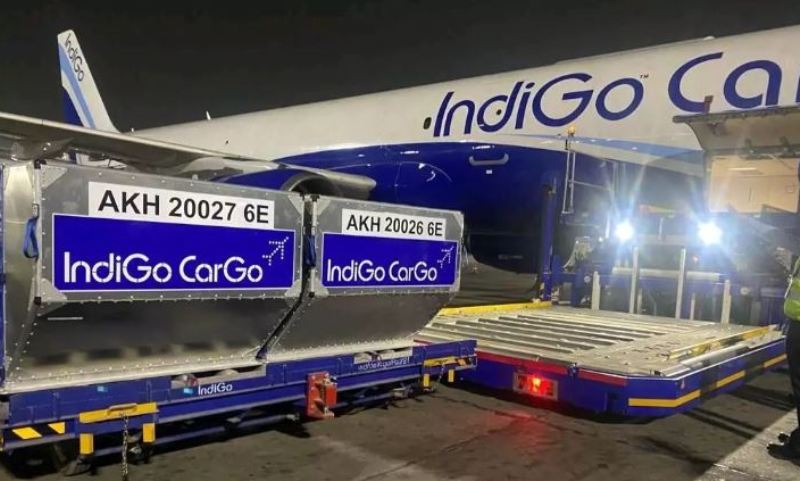
IndiGo, India’s largest private airline, ended the just-concluded fiscal year 2023-24 on a strong note for its CarGo unit’s performance.
Combined revenue from bellyhold and freighter capacity for the fiscal year was up 7% year on year, with tonnage logging a double-digit-percentage increase of 17%, CarGo International CCO Mark Sutch said.
Mr Sutch believes the airline has an opportunity to expand its cargo market share as network capacity and trade volumes build.
“At present, we are aiming for a tonnage growth of approximately 19%,” he said.
By segment, IndiGo’s mainstay domestic cargo belly volumes for 2023-24 swelled 20.2% year on year, as the market expanded in the 7%-to-8% range.
“The focus for this year is to build tonnage on ‘lean flights’ from metro to non-metro cities, and non-metro to non-metro,” said Mr Sutch. “This is a focus of the sales teams to tap an incremental revenue stream with attractive service and pricing.”
For international belly space, the airline reported a 10% dip in tonnage levels, due to higher passenger load factors, but the yield saw a double-digit increase.
IndiGo is especially targeting inbound volumes on the international leg, a market that continues to be the fiefdom of foreign carriers with significant capacity by way of wide-body aircraft, including freighters.
“We are expecting double-digit growth on import cargo in the coming quarter, and this will continue,” Mr Sutch said.
IndiGo holds some 3% of the international tonnage out of India, with the commodity mix mainly covering pharmaceuticals, perishables, textiles, garments and automotive components.
Three dedicated freighters account for some 4% of CarGo’s tonnage, used mostly on a non-scheduled and/or a scheduled charter basis for international connections. These converted A321s have a 23-tonne payload, lower than the 27-tonne payload often cited for such models, said IndiGo officials.
“We do have some domestic operations [for the freighters], but those are generally seasonal,” they said.
And Mr Such added: “The major challenges of operating international narrowbody freighters come from the market imbalance in India, in terms of trade flows.”
For Asia routes, inbound volumes are substantial, with little export potential, while the pattern is in the opposite order for Middle East destinations, he explained.
To grab a larger slice of the buoyant market, Mr Sutch said the airline had plans to beef up the CarGo team, particularly in capacity forecasting and revenue management, which he believes will help yield the desired target goals, as a fourth freighter joins in the near term.
Additionally, IndiGo recently inked a deal to acquire 30 widebody Airbus 350s, with an option to purchase another 70 aircraft, with deliveries scheduled to start from 2027.
This fleet upgrade would effectively give the airline the ability to handle palletised cargo with significant growth potential, IndiGo officials claimed.
“The A350 is a very efficient cargo aircraft in pax version, and we are very excited to have this in the future.”