
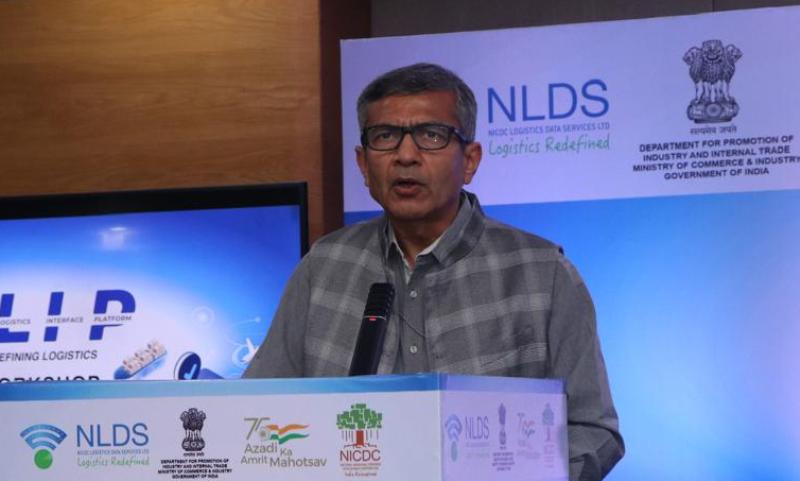
Once a new government is formed, more industrial sectors may see liberalisation in foreign direct investment (FDI) norms and the industry should prepare itself for a lower tariff regime in the long run, according to Rajesh Kumar Singh, secretary in the department for promotion of industry and internal trade (DPIIT).
“While doing so, you have every right to expect that any distortionary in any inversion in those taxes in our tax regimes should be corrected,” Singh told the Confederation of Indian Industries (CII) annual business summit.
“DPIIT is doing a cross-sectoral study to ensure that both in the GST [goods and services tax] Council and the finance ministry, we try to rationalise it and show that those inversions are removed as to improve the competitiveness of our manufacturing sector,” he said.
“Recently, we delivered on liberalising our FDI norms in space, and it is quite possible that under a new government, we can attempt some further liberalisation of any pockets that are left,” he was quoted as saying by domestic media reports.
However, he did not disclose the sectors that could see liberalisation in FDI norms.
While the Production-Linked Incentive scheme has led to investment flows, there could be other ways to attract funding without budgetary outlay, he said.
Non-tariff policies like quality control orders are being used to boost investment and exports, he added.