
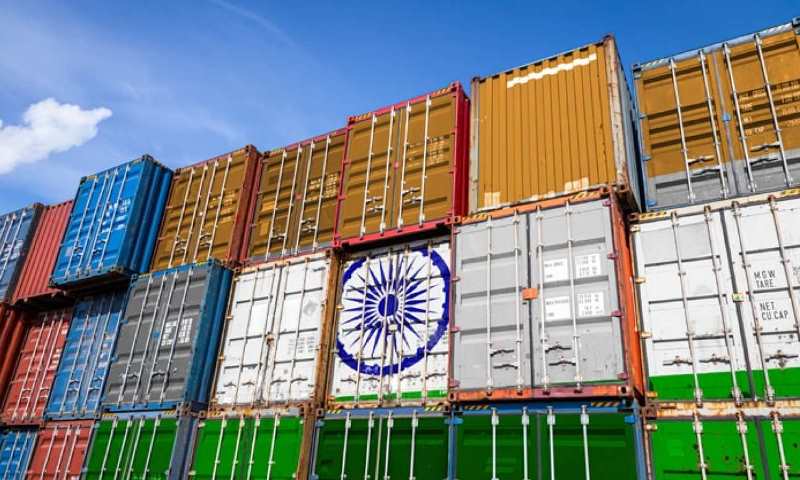
India may face significant disruptions if the US imposes a 50 percent tariff on Indian goods from August 27. A market analysis shows that nearly $8.5 billion worth of India’s major exports—defined as categories with over $150 million in annual trade—were heavily reliant on the US market in 2024.
In total, the US imported goods worth $91.2 billion from India last year. Of this, the top 50 export categories (excluding items like steel, pharmaceuticals, and automobiles, which are exempt or excluded from the new tariffs) accounted for $31.4 billion. Among these, around $8.5 billion worth of exports came from categories where the US absorbed over 50 percent of India’s outbound shipments, underscoring the challenge of market diversification.
Solar modules top the list of at-risk exports. The US alone accounted for 98 percent—or $1.6 billion—of India’s solar module exports. India’s recently signed trade deals with countries such as the UK, UAE, and Australia may offer only limited relief as these countries lack the capacity to absorb such volumes.
Similarly, more than 88 percent of India’s cement and artificial stone exports were US-bound, amounting to over half a billion dollars. Printed cotton linen and plastic-coated textiles also exhibit over 80 percent export dependence on the US market. In the seafood sector, exports of prepared shrimps and prawns worth $420 million were heavily reliant on the US, which purchased 80 percent of these shipments.
Wool carpets and other bed linen exports, collectively valued at around $1 billion, are also vulnerable due to high US dependence. These segments may struggle to pivot quickly to alternative markets.