
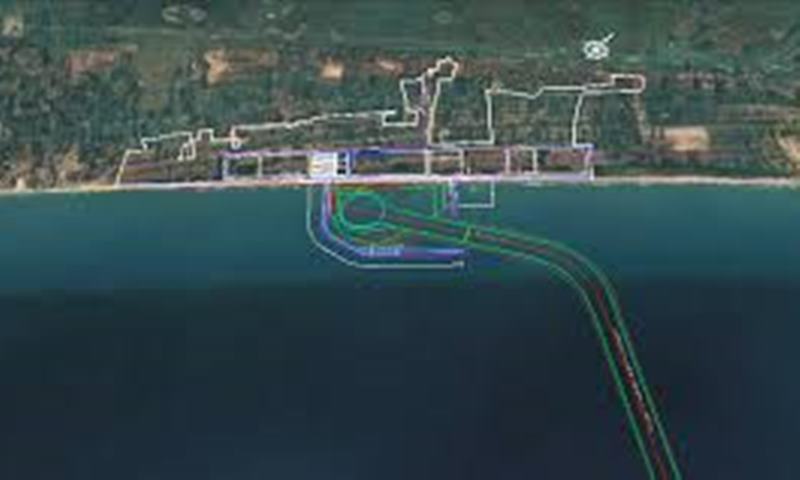
Kakinada Gateway Port Ltd (KGPL), backed by the promoters of Aurobindo Pharma, is advancing an ambitious plan to develop a deep-draft port and an integrated industrial park in Andhra Pradesh’s Kakinada, positioning the region as a major logistics hub on India’s east coast.
In the first phase, three berths with a combined capacity of 16 MMTPA are expected to be operational by early 2027, according to KGPL Managing Director Ram Reddy Ojili. The company aims to create a multi-product logistics hub, including container facilities and partnerships with global shipping lines. The port is also targeting fertilizer imports, rice exports, and future-ready cargo such as green ammonia and mineral shipments from Africa.
“This project is one of a kind in India, fantastically located with strong connectivity and proximity to a smart city like Kakinada,” Reddy said, adding that the port is being built with a 50-year vision.
Massive Investments Underway
The Aurobindo promoters are committing more than ₹10,000 crore to the overall development within the Kakinada SEZ.
Port development: ₹3,300 crore
Dedicated rail link: ₹350 crore
Desalination plant: ₹1,310 crore
Industrial park & units: ₹500 crore, including investments in penicillin-G manufacturing
So far, nearly ₹6,000 crore has already been invested, largely through promoter equity.
Auro Infra Pvt Ltd (AIPL) had acquired GMR’s 51% stake in Kakinada SEZ in 2020. KGPL, a step-down subsidiary of AIPL, is ultimately owned by RPR Enterprises, which holds 82.26% in AIPL. AIPL in turn holds 74% of KGPL through Kakinada SEZ Ltd.
The project is being funded conservatively with a 70:30 debt-equity mix, led by an SBI-anchored consortium. With financial closure achieved, KGPL is revising its loan requirement from ₹2,900 crore to ₹3,300 crore.
Future Expansion Plans
Phase 2 will add eight more berths for containers, LNG, and liquid cargo, expanding the capacity to 50 MMTPA by 2028, with a long-term master plan to reach 100 MMTPA.
Reddy highlighted the need for capacity development on the east coast to match the trade-heavy west coast, especially with rising industrial activity across Andhra Pradesh, Telangana, and Tamil Nadu.
While CARE Ratings has pointed out risks such as cargo ramp-up challenges, competition from established ports like Vizag, Gangavaram, and Krishnapatnam, and economic cycle sensitivity, it has also noted strong promoter backing and robust financial structuring as key strengths.
SEZ-Driven Cargo Demand
Calling ports “cash cows,” Reddy pointed to typical 50–60% EBITDA margins in the Indian port sector. He believes the integrated SEZ will ensure assured cargo volumes.
Aurobindo Pharma has already set up a major penicillin-G plant in the SEZ under the Centre’s PLI scheme with a ₹2,500 crore investment, along with another large facility for penicillin-based derivatives. Interest from other industrial players looking to establish units in the SEZ is growing steadily.
With India’s trade volumes rising and the east coast infrastructure expanding more slowly than the west, KGPL sees Kakinada Gateway emerging as a pivotal node for India’s Look East policy, serving Bangladesh, Southeast Asia, and beyond.
KGPL is developing the port under a DBFOT concession with the Andhra Pradesh Maritime Board, with a 30-year contract extendable by two additional 10-year blocks—giving the project a potential 50-year operational horizon.