
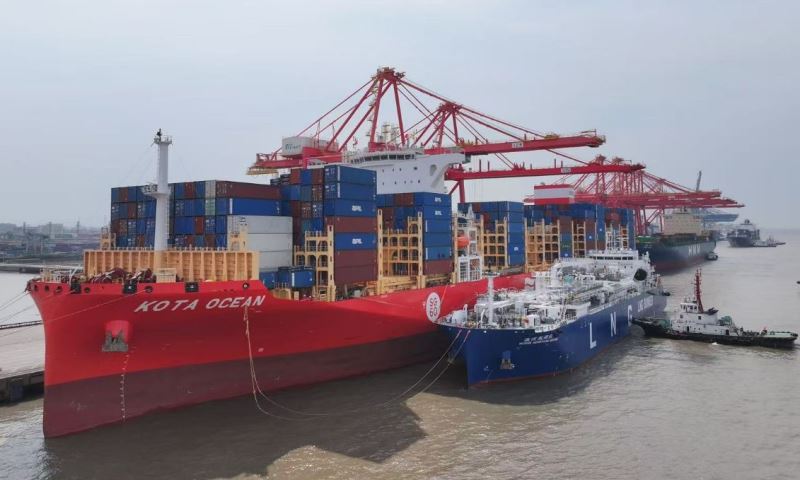
Pacific International Lines (PIL) has successfully completed its first simultaneous LNG bunkering operation at Shanghai’s Waigaoqiao Port, marking a significant milestone in the company’s green shipping journey and the terminal’s transition towards cleaner marine fuel solutions.
The operation was carried out on 4–5 May aboard PIL’s LNG dual-fuel vessel Kota Ocean at the Mingdong Terminal. During the operation, approximately 4,300 cubic metres of liquefied natural gas (LNG) were supplied by SIPG Energy while cargo handling activities continued simultaneously, ensuring operational efficiency without disruption.
This achievement also represents the first-ever LNG bunkering operation conducted at the Mingdong Terminal, highlighting the Port of Shanghai’s growing capabilities in supporting sustainable maritime operations.
The successful operation was completed with the support and coordination of the Pudong and Wusong Maritime Safety Administrations, alongside close collaboration between PIL, SIPG Energy, and terminal stakeholders to ensure safe and seamless execution during China’s Labour Day “golden week”.
Kota Ocean is one of PIL’s eight LNG dual-fuel vessels introduced as part of the company’s ongoing fleet modernisation programme. The initiative aligns with PIL’s long-term sustainability strategy and its commitment to achieving net-zero emissions by 2050.
PIL stated that it will continue strengthening partnerships across ports, regulatory bodies, and energy providers to accelerate the adoption of greener and more sustainable shipping solutions worldwide.