
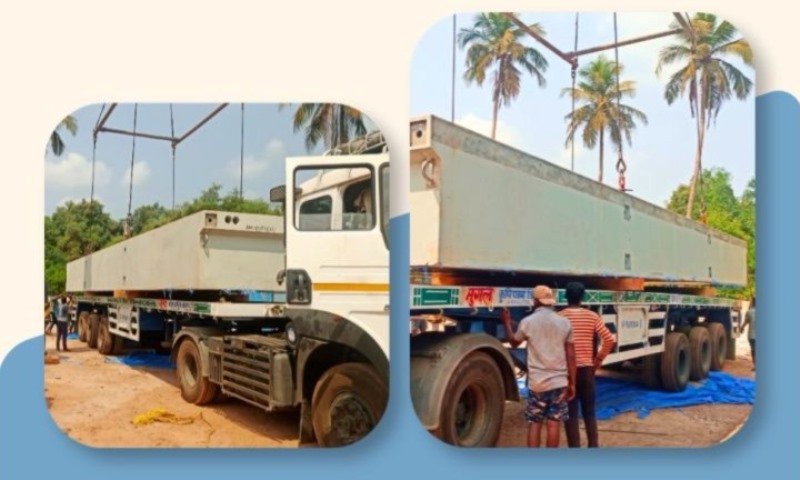
In a significant step towards developing inland water transport in Jammu & Kashmir, pontoons are being transported to the Union Territory to support the creation of essential river navigation infrastructure along the River Jhelum, designated as National Waterway-47 (NW-47).
The initiative is being undertaken in line with the Memorandum of Understanding (MoU) signed between the Inland Waterways Authority of India and the Government of Jammu & Kashmir. It reflects a coordinated push to unlock the economic and tourism potential of the region’s waterways through improved navigability and infrastructure development.
Pontoons—floating structures used to support jetties and terminals—will play a critical role in enabling safe and efficient passenger movement along the river. These modular units are expected to facilitate the development of floating terminals, embarkation points, and other support infrastructure required for cruise operations on the Jhelum.
The project is part of a broader vision to promote river cruise tourism in Jammu & Kashmir, offering visitors a unique way to experience the region’s scenic landscapes and cultural heritage. Once operational, the enhanced infrastructure is expected to attract both domestic and international tourists, contributing to local economic growth and employment generation.
Officials indicated that the development of NW-47 will not only strengthen tourism but also open up opportunities for sustainable and eco-friendly transportation. Inland waterways are considered a cost-effective and low-emission alternative to conventional modes of transport, aligning with India’s broader focus on green logistics.
The movement of pontoons marks an early but crucial milestone in the implementation of the MoU, setting the stage for future phases of infrastructure development along the River Jhelum.