
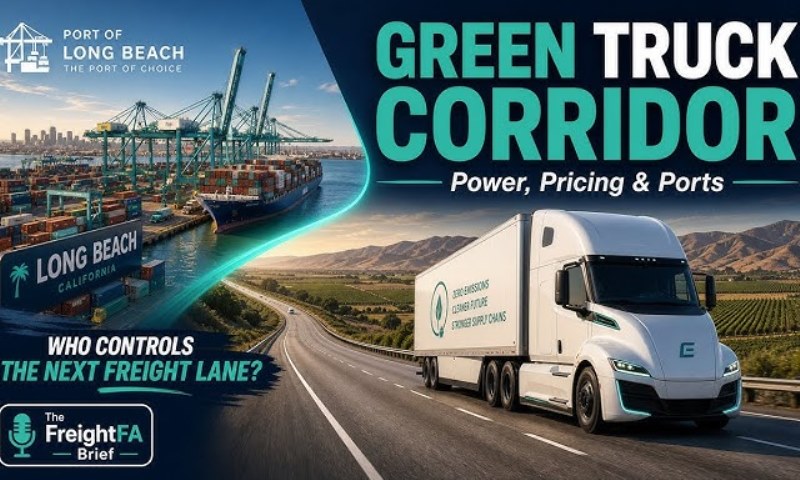
The Port of Long Beach has launched a new green truck corridor initiative aimed at creating a cleaner and more sustainable freight connection between the United States and Mexico, supporting the future of cross-border trade.
The corridor is designed to accelerate the adoption of zero-emission and low-emission trucking solutions, helping reduce carbon emissions from freight transportation while improving the efficiency of cargo movement between key trade hubs.
The initiative will focus on strengthening logistics links between the port and Mexico through cleaner transport operations, supporting supply chains that move goods across North America. It is expected to benefit industries reliant on fast and reliable cross-border freight, including manufacturing, retail, and automotive sectors.
Port officials highlighted that the programme aligns with broader sustainability goals to reduce the environmental impact of goods movement while maintaining the competitiveness of one of the busiest maritime gateways in the United States.
As trade volumes between the US and Mexico continue to grow, the green truck corridor is expected to play a key role in building a more resilient and environmentally responsible logistics network. The project also reflects increasing efforts across the global shipping and logistics sector to transition toward cleaner transportation solutions.