
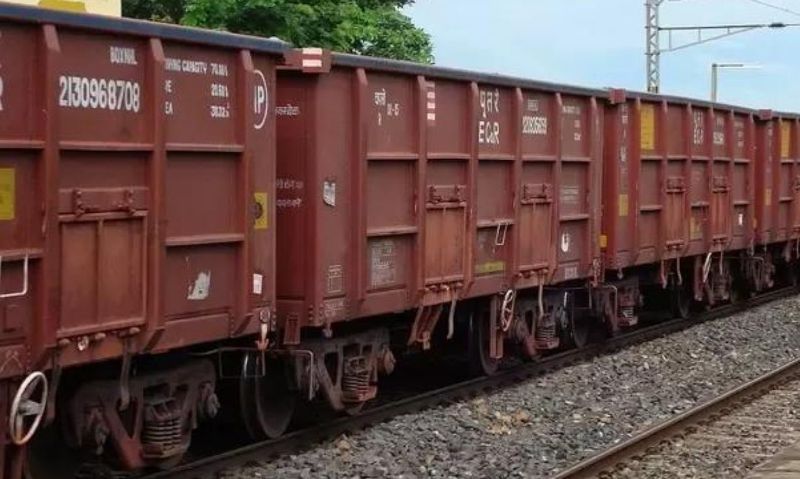
Private wagon manufacturers, who ramped up production capacity sharply over the past three years in line with the railway ministry’s ambitious freight expansion roadmap, are facing growing uncertainty as no fresh procurement orders have been placed after the completion of the first phase of wagon induction.
Industry executives say the lack of clarity on the next round of orders has triggered anxiety among manufacturers who invested heavily in capacity expansion based on the commitments outlined in the National Rail Plan (NRP). Railway ministry officials, however, maintain that wagon requirement assessment is a continuous process and that fresh orders will be placed as and when needed.
The ministry remains confident about its freight performance in 2024–25, a year in which Indian Railways emerged as the world’s second-largest freight-carrying railway, recording freight loading of 1,617 million tonnes.
Under the NRP framed in 2022, the railway ministry projected a doubling of the national wagon fleet from about 3 lakh units to 6 lakh by 2030 to support higher freight volumes and boost revenues. As part of the plan, the ministry placed its first major procurement order for 1,17,229 wagons, to be manufactured over three years starting in 2022.
Both private and public sector manufacturers delivered 37,650 wagons each in 2022–23 and 2023–24, followed by 41,929 wagons in 2024–25. This marked an all-time high in wagon production and an 11 per cent year-on-year increase.
“Almost all major manufacturers have completed deliveries by the end of 2025, except for a few smaller players who defaulted on timelines,” a senior railway official said. According to the NRP, a second procurement order for over 2 lakh wagons—planned to be manufactured over five years up to 2030—was expected to be placed in 2025–26 with defined annual targets.
“These manufacturers scaled up capacity based on the ministry’s aggressive freight expansion plans and successfully delivered over one lakh wagons in three years up to FY 2024–25,” the official said. “However, they are now anxious as the ministry has yet to indicate any intent to place the second order.”
Officials pointed out that the NRP aims to raise railways’ share in freight transportation from the current 27 per cent to 45 per cent by 2030—a goal that would require a substantial increase in wagon availability. As per plan projections, Indian Railways was expected to procure between 40,000 and 46,000 wagons annually from 2025–26 to 2029–30 from both private and government manufacturers. Industry sources noted that orders for these wagons should ideally have already been placed to ensure continuity.
Industry experts underlined that enhancing freight capacity is critical for Indian Railways, as freight operations generate the surplus used to cross-subsidise passenger services. Freight contributes nearly 65 per cent of Indian Railways’ total earnings, while the remaining 35 per cent comes from passenger services, parcels and non-fare revenue.
Meanwhile, the Standing Committee on Railways, in its report titled Increasing Freight Related Earnings of Indian Railways and Development of Dedicated Freight Corridors, tabled in Parliament in December 2025, commended the induction of around 30,000 wagons annually. The committee observed that increased private sector participation could significantly improve timely wagon availability and urged Indian Railways to actively promote private investment by setting clear and measurable targets for private wagon ownership.
With freight growth central to Indian Railways’ long-term financial sustainability, manufacturers and industry observers are now watching closely for signals on the next phase of wagon procurement.