
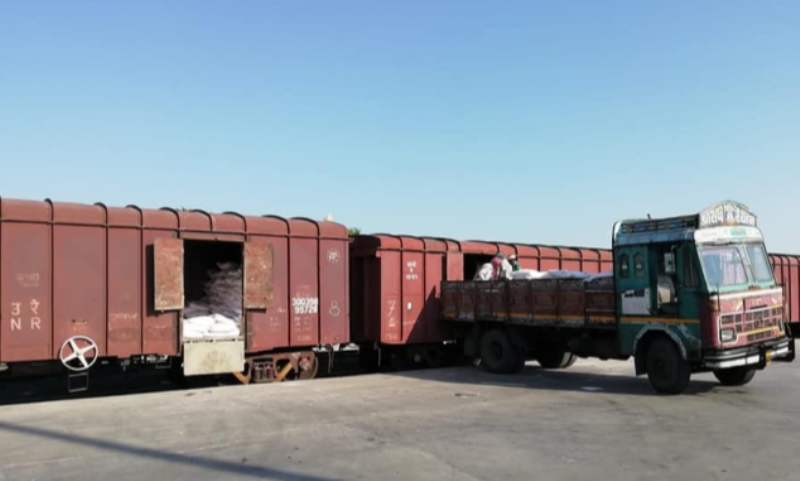
The average speed of freight trains in India has been stagnant at 25 kilometers per hour over the last 11 years. This truly surprising statistic underscores the pressing challenges faced by Indian Railways in modernizing its freight operations. The data, revealed in the latest report by the Standing Committee on Railways, has sparked a renewed call for enhancing the speed and efficiency of freight services, which remain a cornerstone of Indian Railways’ earnings.
The report, tabled in Parliament on December 13, 2024, highlighted the critical need to prioritize freight operations to bolster the railways’ revenue. “The average speed of freight trains during the year 2013-24 was only 25.14 km/h,” the committee noted. It emphasized that increasing train speeds is crucial to achieving the ambitious revenue targets set for the freight segment.
Indian Railways, recognizing these challenges, has undertaken two major infrastructure projects:
• Eastern Dedicated Freight Corridor (EDFC): Spanning 1,337 kilometers from Ludhiana to Sonnagar, this corridor has been completed and is operational.
• Western Dedicated Freight Corridor (WDFC): Stretching 1,506 kilometers from Jawaharlal Nehru Port Trust (JNPT) in Mumbai to Dadri, the project remains partially incomplete, with a 102-kilometer section from Vaitarna to JNPT expected to be finished by December 2025.
These corridors aim to decongest existing rail routes, reduce transit times, and enhance the overall efficiency of freight movement.
Freight services continue to be the financial backbone of Indian Railways, contributing significantly to its revenue. In the fiscal year 2023-24, the railways earned INR 1,68,293 crore from freight, with a target of INR 1,80,000 crore set for 2024-25. However, the committee, chaired by Andhra Pradesh BJP leader CM Ramesh, urged the Ministry of Railways to expedite the construction of additional Dedicated Freight Corridors (DFCs) to further capitalize on freight revenue opportunities.
The committee also raised concerns about the sluggish expansion of Kavach, an automatic train protection system designed to enhance safety. Currently, Kavach has been deployed on 1,465 route kilometers of South Central Railway, and 80 route kilometers of North Central Railway.
Union Railways Minister Ashwini Vaishnaw informed the Lok Sabha that Kavach work is ongoing on approximately 3,000 route kilometers, with track-side infrastructure completed on 1,081 kilometers. However, the committee underscored the need for faster deployment, especially on key corridors like DelhiChennai and Mumbai-Chennai, for which tenders have been issued.
Kavach assists locomotive pilots in maintaining speed limits, automatically applying brakes when necessary, and ensuring operational safety even in adverse weather conditions.
Another area of concern highlighted in the report is the underutilization of funds allocated for research and development (R&D). The Research Design and Standards Organization (RDSO), the R&D arm of Indian Railways, has struggled to utilize even the limited funds set aside for innovation and modernization:
• In 2022-23, only ₹39.12 crore of the revised allocation of ₹107 crore was utilized.
• In 2023-24, the expenditure dropped further to ₹28.34 crore out of ₹66.52 crore.
For 2024-25, the budget estimate for railway research is just ₹72.01 crore. The committee stressed that investing in R&D is essential for the long-term modernization of Indian Railways and urged the ministry to take immediate corrective measures.
The committee also pointed out that the net revenue of Indian Railways has been negligible for the past two fiscal years, with the budget estimate for 2024-25 pegged at a modest INR 2,800 crore. This revenue shortfall has been attributed to losses in the passenger segment, particularly in AC classes.
The committee recommended a thorough review of passenger segment revenues, suggesting measures to reduce losses while maintaining affordability for travelers.
The Standing Committee’s report paints a mixed picture for Indian Railways. While ambitious infrastructure projects like the DFCs and safety initiatives like Kavach indicate a commitment to progress, the persistent challenges of slow freight speeds, underfunded research, and low passenger revenue highlight the need for a comprehensive overhaul.
For Indian Railways to remain a vital economic driver, it must balance operational efficiency with innovation, ensuring that freight services evolve to meet the demands of a growing economy. The recommendations of the committee, if implemented swiftly, could be the much-needed catalyst for transforming India’s rail freight sector.