
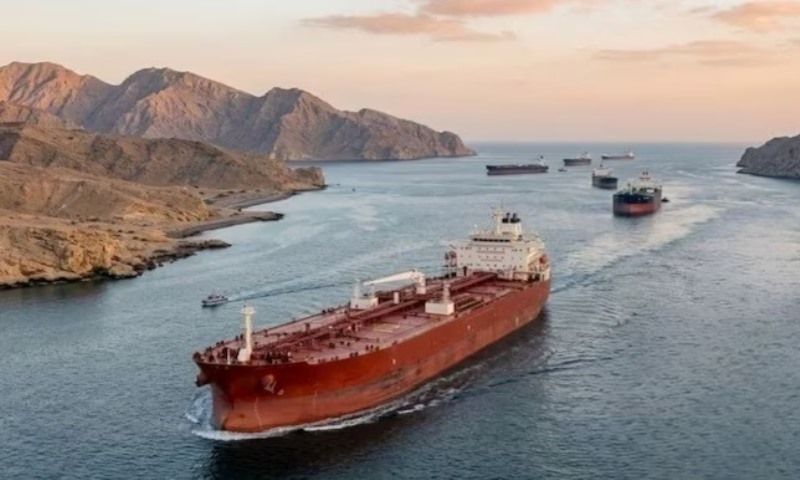
Maritime traffic through the Strait of Hormuz remains significantly below pre-conflict levels despite the recent US-Iran agreement, according to maritime intelligence platform Kpler, although early signs suggest a gradual recovery may be underway ahead of the waterway’s planned reopening on Friday.
Kpler data shows that eight vessels carrying raw materials transited the strategic chokepoint on Monday and six on Tuesday, broadly in line with the previous week’s average of eight daily transits. However, this remains far below the approximately 120 vessels per day that passed through the strait before hostilities disrupted regional shipping, according to industry estimates.
The Strait of Hormuz is a critical artery for global trade, handling around one-fifth of the world’s hydrocarbon exports in addition to substantial volumes of other commodities and raw materials.
A notable development has been the reactivation of AIS transponders by several tankers linked to Iran’s so-called shadow fleet. Vessels including the Amber, Diona, Sonia I, Starla, Tour 2 and Hero II resumed transmitting location data on Tuesday and Wednesday after remaining dark for months to avoid maritime surveillance and sanctions enforcement.
According to Kpler, these vessels had loaded crude oil at Iran’s Kharg Island terminal and departed through the Strait of Hormuz during the conflict with their tracking systems switched off. Most have now resumed AIS transmissions from Chabahar, Iran’s southeastern port on the Gulf of Oman, situated near the entrance to the Strait of Hormuz.
MarineTraffic said the near-simultaneous reactivation of multiple vessels suggests coordinated action by operators, reflecting a less hostile operating environment following the ceasefire agreement. Maritime monitoring firm TankerTrackers noted that some of these tankers had previously crossed areas affected by the US blockade imposed in April after Iran’s effective closure of the strait.
While Tehran has claimed that the US blockade has been lifted, Washington has yet to officially confirm the move.
The United States and Iran are expected to sign a memorandum of understanding in Switzerland on Friday, formally ending the conflict and initiating a two-month negotiation process. Reopening the Strait of Hormuz is expected to be the first major outcome of the agreement, with US President Donald Trump announcing that the waterway would fully reopen following the signing.
Industry observers caution, however, that shipping operations are unlikely to return to normal immediately. A European maritime industry source warned that ports across the region could face significant congestion as delayed cargoes and vessels return to service.
“Ports will be congested and everyone will have to wait their turn,” the source said, adding that supply chains and shipping schedules disrupted by weeks of uncertainty will require time to be fully reorganised.
Market participants expect vessel movements through the Strait of Hormuz to increase gradually in the coming weeks as confidence returns and logistical bottlenecks are resolved.