
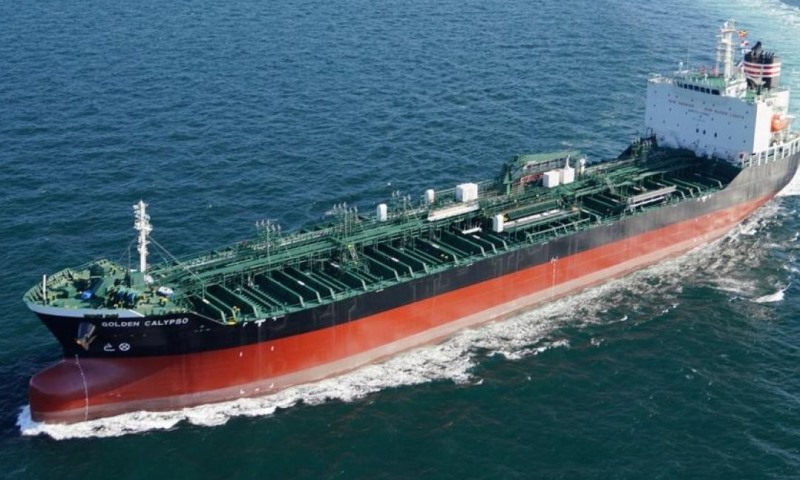
Synergy Marine Group has strengthened its global fleet with the addition of two new vessels built at leading Asian shipyards. The Kamsarmax BASIC PROGRESS has joined the dry bulk fleet from Jinglu Shipyard in China, while the chemical tanker GOLDEN CALYPSO has entered service following its delivery from Asakawa Shipbuilding in Japan.
The company said the names of the vessels reflect core values that resonate strongly in today’s maritime environment. BASIC PROGRESS symbolises disciplined and purposeful advancement rooted in strong fundamentals, while GOLDEN CALYPSO reflects rhythm and resilience—qualities critical for consistent and reliable operations amid a rapidly changing industry landscape.
The delivery of BASIC PROGRESS at Jinglu Shipyard was marked by the presence of Mr Yusuke Okochi, Managing Director of Doun Kisen Co., Ltd., and Mr Toshiyuki Yoshikawa, New Building Manager, Ship Management Division. At Asakawa Shipbuilding, Synergy also reconnected with Captain Katsuya Abe, President of Nissen Kaiun, a long-standing partner that entrusted Synergy with its first managed vessel exactly 20 years ago—an association that played a formative role in shaping the company’s approach to ship management.
Reflecting on the changing expectations from ship managers, Ajay Chaudhry, Co-CEO, Ship Management at Synergy, said the role has expanded well beyond traditional operations.
“Our role has grown well beyond operations. As lifecycle custodians, we are expected to deliver long-term value, not only through safe vessel management, but by aligning with decarbonisation, regulatory change, and digital transformation,” he noted, adding that accountability across every phase of a vessel’s life has become central to modern ship management.
Mr Chaudhry’s visit to the shipyards underscored Synergy’s hands-on leadership culture. The company said his engagement went beyond ceremony, involving direct interaction onboard, close listening to crews, and reinforcement of operational and safety standards.
Looking ahead to 2026, Synergy highlighted that ship managers face increasing complexity, with tighter Carbon Intensity Indicator (CII) thresholds, full implementation of the EU Emissions Trading System (ETS), stricter biofouling regulations, and growing demands on maritime professionals. The company emphasised that leadership in this environment requires anticipation and integration, rather than reactive compliance.
Vikas Trivedi, Co-CEO, Ship Management, said effective custodianship today means preparing for future needs.
“Custodianship today is about anticipating what ships, mariners, and clients will need, not just now, but years ahead. Performance, compliance, and resilience are interlinked and depend on how well we manage people, technology, and operations as one system,” he said.
As the year draws to a close, Synergy expressed appreciation to its partners, seafarers, and shore teams for their continued trust and support. Entering 2026, the company said it remains focused on clarity of purpose, humility, and confidence in the strength of its people and long-standing partnerships.