
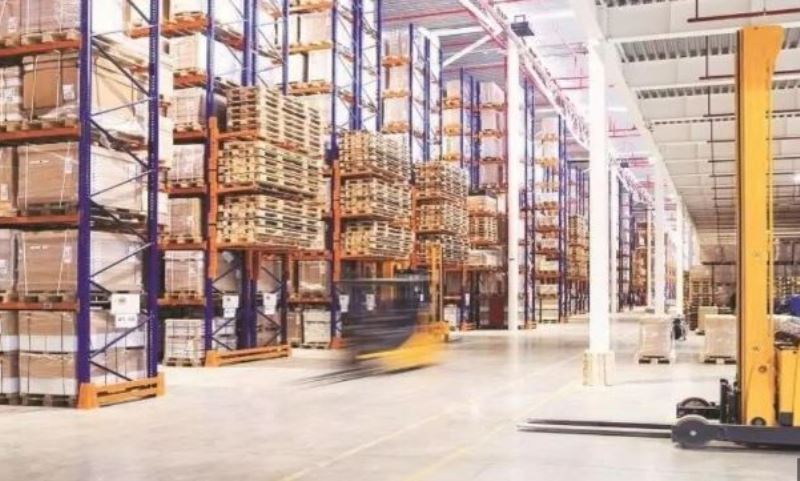
In a major push to strengthen its logistics ecosystem, the Tamil Nadu government on Tuesday unveiled the Tamil Nadu Warehousing Policy 2026, aimed at promoting large-scale, inclusive and diversified warehousing infrastructure across the State, with a special focus on delta districts, Category C districts, and Tier II and Tier III cities.
Released by Chief Minister M.K. Stalin, the policy aligns with Tamil Nadu’s vision of achieving a $1 trillion economy by 2030 and complements the objectives of the Tamil Nadu Logistics Policy.
Strong Warehousing Base
Tamil Nadu already ranks among India’s leading warehousing markets, supported by over 40,000 factory units and transaction volumes comparable to major logistics hubs such as NCR and Maharashtra. The State contributes nearly 19 per cent of India’s total logistics investments, with Chennai, Coimbatore and Hosur emerging as key warehousing clusters.
The new policy seeks to expand storage capacity across commercial, urban, cold-chain and agro-based segments, while streamlining regulatory and compliance processes to benefit warehouse developers, operators and trade bodies.
Focus on Balanced Growth
A central objective of the Warehousing Policy 2026 is to strengthen existing warehousing clusters and promote new developments in Tier II and Tier III cities, particularly in delta and Category C districts. These initiatives are designed to improve storage solutions for industrial and commercial users, extend warehouse infrastructure across underserved regions, and provide targeted support to agriculture and perishable commodities.
The policy adopts a commodity-based approach, aligned with the State’s industrial and agricultural profile, and places strong emphasis on Ease of Doing Business through simplified approvals and regulatory reforms.
Strategic Development Framework
Policy interventions have been organised under six key themes:
Integrated Greenfield Development
Brownfield Capacity Expansion
Public-Private Partnership Promotion
Sustainable and Smart Warehousing
Commodity-Specific Warehousing
Ease of Doing Business for the Sector
The government will provide subsidies to support the development of new warehousing assets, particularly within government-operated industrial parks and estates, and will encourage integration with proposed Multi-Modal Logistics Parks and Dry Ports across the State.
Enhanced Logistics Connectivity
To improve cargo movement from industrial and agricultural belts, the State will promote rail linkages to warehousing clusters in collaboration with the Ministry of Railways. Cluster-based warehouse development will also be encouraged along existing and upcoming industrial, defence and connectivity corridors.
Incentives and Reforms
On the non-fiscal side, all existing and upcoming warehousing and storage units in Tamil Nadu will be granted Industry Status. The policy removes restrictions on plot and ground coverage, increases the maximum permissible warehouse height from 18.3 metres to 24 metres, and extends the State Single Window Clearance mechanism to the warehousing sector.
Sustainability and Skill Development
To encourage green practices, eligible new warehouses can avail a 25 per cent subsidy, capped at ₹2 crore, for investments in sustainable initiatives beyond mandatory pollution control norms. In addition, projects can receive a 50 per cent subsidy towards the cost of technical training for warehouse employees. Special incentive packages will be offered for warehouse projects in Category C and delta districts.
Implementation
The Tamil Nadu Industrial Development Corporation (TIDCO) has been appointed as the nodal agency for implementation. The Warehousing Policy 2026 will be in force for five years and is expected to play a critical role in strengthening Tamil Nadu’s logistics backbone while driving inclusive regional and industrial growth.