
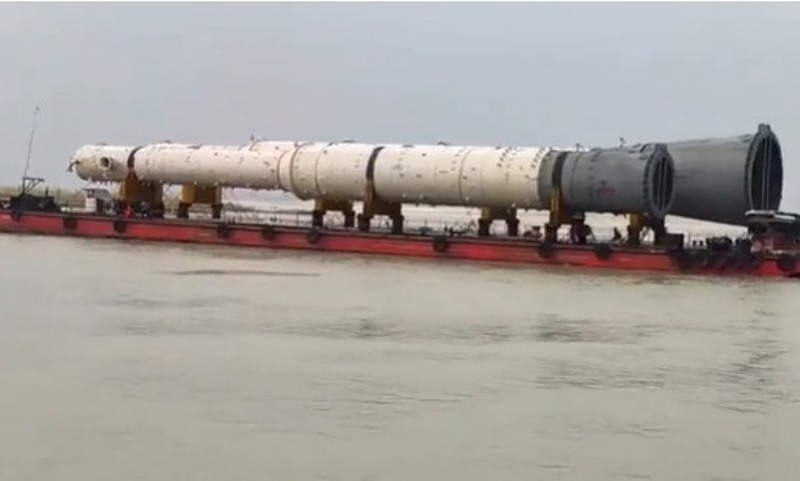
India’s inland waterways sector continues to gain momentum with the successful movement of a 1,668-metric-ton mega cargo shipment from Diamond Harbour in Kolkata to Bihar through the Ganga waterway, highlighting the country’s expanding logistics capabilities and the growing role of inland water transport in reducing supply chain costs.
The development comes as the Government of India intensifies efforts to strengthen inland waterways as the country’s third major transport mode alongside road and rail. Under the National Waterways Act, 2016, a total of 111 waterways across 24 states have been declared National Waterways.
The government has set an ambitious target of transporting more than 200 million tonnes of cargo through inland waterways by 2030, increasing to over 500 million tonnes by 2047. Flagship initiatives including Maritime India Vision 2030, Maritime Amrit Kaal Vision 2047, the Jal Marg Vikas Project, Arth Ganga, Sagarmala, PM Gati Shakti, and the Jalvahak Cargo Promotion Scheme are aimed at creating an integrated, sustainable, and efficient water-based logistics ecosystem.
Amid this national push, Tamil Nadu has been identified as a state with significant untapped potential. National Waterway-4 (NW-4) includes the nearly 110-kilometre South Buckingham Canal stretch between Chennai and Marakkanam, offering opportunities to develop an efficient inland transport corridor connecting ports, industries, and logistics hubs.
However, experts emphasize that realizing this potential will require addressing long-standing challenges such as encroachments, sewage and industrial pollution, silt accumulation, and inadequate bridge clearances. Infrastructure improvements, including the development of cargo terminals, jetties, warehouses, cold storage facilities, and enhanced last-mile connectivity, will be essential.
Integrating the Buckingham Canal with Chennai Port, Kamarajar Port, and V.O. Chidambaranar Port could facilitate the movement of bulk cargo through waterways, easing pressure on road networks while reducing logistics costs, fuel consumption, traffic congestion, accidents, and carbon emissions.
Beyond freight transportation, the revival of the Buckingham Canal is expected to deliver wider socio-economic and environmental benefits, including improved flood management, water conservation, ecological restoration, urban renewal, and tourism development.
With the national policy framework and investment roadmap already in place, stakeholders believe proactive support from the Tamil Nadu Government through faster approvals, canal restoration, pollution control, and coordinated infrastructure development could transform the Buckingham Canal into a key component of India’s multimodal logistics network and contribute significantly to the country’s vision of a developed and self-reliant economy.