
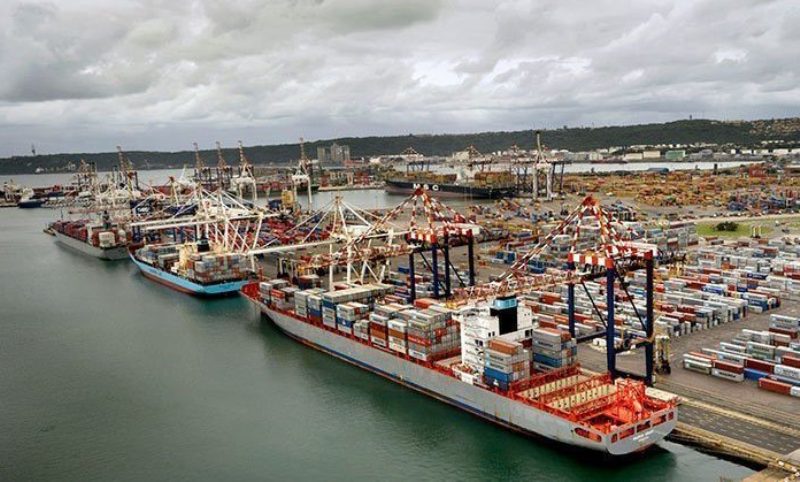
The continuing loss of transhipment cargo “reinforces the picture of a decade-long decline” in South Africa’s logistics sector, according to the South African Association of Freight Forwarders (Saaff).
It says its latest data highlights the “urgent need” for structural reform.
In its newsletter this week, Saaff noted that transhipment volumes at South Africa’s ports had been in steady decline over the past few years.
In 2016, 23% of the nation’s container volumes were transhipment shipments; by last year, this figure had fallen to 13%.
“This downward trend weakens port competitiveness, leading to lost revenue, diminished economies of scale, and reduced global shipping connectivity,” said Saaff.
Its data showed that much of its transhipment cargo had shifted to alternative hubs like Walvis Bay in Namibia, and Maputo in Mozambique, “highlight[ing] inefficiencies of local port operations”.
Indeed, despite Red Sea diversions increasing traffic around the region, one of the main reasons stakeholders opt not to tranship cargo in South Africa is due to the country’s archaic logistics infrastructure.
Further, the often-adverse weather around the country’s coast means any weakness in handling operations are exacerbated. According to Saaff, the port of Cape Town lost more than 40 operational hours this week because of bad weather.
“To reverse [the loss of transhipment cargo], urgent interventions are needed… Without action, South Africa risks losing its strategic position in regional and global maritime trade” the association warned its members.
Reform needs to include improving port productivity, reducing turnaround times, and enhancing regional integration, it added.
However, the association pointed out that progress was being made. Cape Town is set to receive nine new port cranes next month, to become operational between May and September, with more arriving in July.
In Durban, four RTGs have been assembled at Pier 1 and four STS replacements are expected to be fully functional at Pier 2 by the end of the year.
Saaff said that while these upgrades were “encouraging”, they were also “long overdue”.
In Agility’s recent Emerging Markets Logistics index, South Africa was put in 23rd place, rising one spot from last year, “reflecting improvements in international logistics opportunities and digital transformation efforts”, said Saaff.
The index assesses the competitiveness of 50 emerging economies based on their logistics strengths, business environments, and infrastructure.
Saaff added: “Despite global economic uncertainties, South Africa’s upward trajectory in the index highlights its potential as a logistics hub in Africa. Consequently, as analysed this week, we desperately need to increase transhipments.
“Many stakeholders remain committed to fixing our logistics network… The stakes are high, but so is the resolve to turn the tide,” it concluded.