
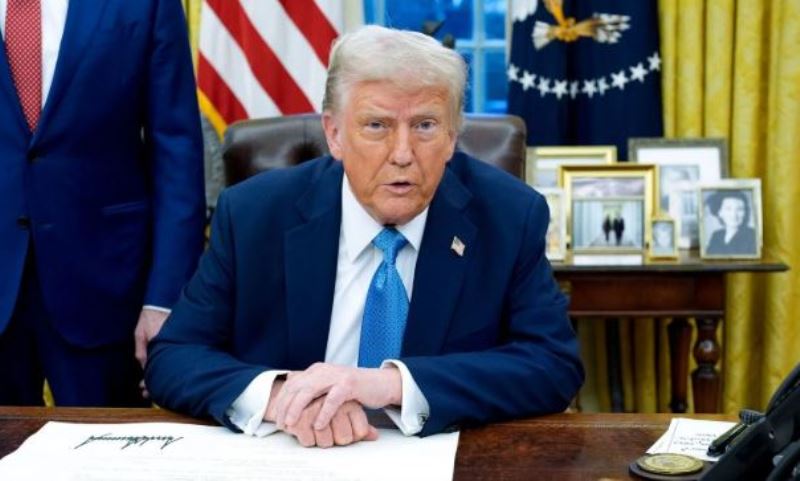
The administration of Donald Trump has released its long-awaited Maritime Action Plan (MAP), a sweeping strategy first set in motion in April 2025 aimed at restoring US dominance in global shipbuilding and strengthening the country’s commercial maritime capabilities.
Issued on February 13 as a 36-page document accompanied by a summary memo, the MAP outlines a coordinated, government-wide approach to revitalizing the US maritime industrial base. While many of its proposals had previously been discussed, the plan provides clearer direction on implementation, navigating federal agencies, funding mechanisms and legal processes to achieve its objectives.
Four Pillars of Reform
The MAP is structured around four key pillars:
-
Rebuilding US shipbuilding capacity and capabilities
-
Reforming workforce education and training
-
Protecting the maritime industrial base
-
Supporting national security and industrial resilience
The plan emphasizes coordination across multiple federal agencies, allied nations, private sector partners, and state and local governments.
In a notable reflection of the administration’s priorities, the MAP is attributed to the Secretary of State and Assistant to the President for National Security Affairs, alongside the Director of the Office of Management and Budget, in coordination with the Secretaries of War, Commerce, Labor, Transportation, Homeland Security, and the United States Trade Representative.
Agencies central to the maritime sector — including the United States Maritime Administration under the Department of Transportation and the United States Coast Guard within the Department of Homeland Security — appear further down the attribution list, underscoring the strong national security dimension embedded in the plan.
Secretary of State Marco Rubio signed off on the introduction, highlighting the administration’s view of maritime strength as a tool of economic and geopolitical influence.
International Cooperation and $150bn Investment
Acknowledging that rebuilding US commercial shipbuilding will take time, the MAP calls for international cooperation as part of a phased redevelopment strategy.
The administration states that President Trump has secured at least $150 billion in dedicated investment from non-US interests for America’s shipbuilding industry. The Department of Commerce is tasked with mobilizing these funds to deliver what it describes as the largest investment in US shipbuilding history.
Among the recommended actions is a “bridge strategy” that allows initial vessels under multi-ship contracts to be constructed at foreign shipyards, while those same foreign partners concurrently invest in, acquire, or partner with US yards to eventually onshore production.
The plan also proposes expanding and adapting existing federal programs, including Title XI loan guarantees, the Small Shipyard Grants Program, and maritime workforce training initiatives, to make them more attractive to foreign partners.
Notably, the MAP does not reference the Jones Act, reflecting its focus on US-controlled vessels trading internationally rather than cabotage policy.
Funding Through Port Fees
A controversial funding mechanism remains under consideration: levies on foreign-built vessels calling at US ports.
The MAP proposes establishing a universal infrastructure or security fee on all foreign-built commercial vessels entering US ports, assessed based on the weight of imported tonnage carried. According to the document:
-
A fee of 1 cent per kilogram could generate approximately $66 billion over ten years.
-
A fee of 25 cents per kilogram could raise nearly $1.5 trillion over the same period.
Proceeds would support a proposed Maritime Security Trust Fund, with the administration arguing that foreign-built vessels benefiting from access to the US market should contribute to revitalizing domestic maritime capabilities.
Long-Term Vision
While many elements of the MAP echo previously floated proposals, the document represents the administration’s most comprehensive articulation to date of how it intends to rebuild US shipbuilding capacity.
By combining foreign capital, federal financial tools, workforce reform and potential port levies, the plan seeks to reestablish a competitive commercial fleet — while reinforcing national security and industrial resilience as central strategic objectives.