
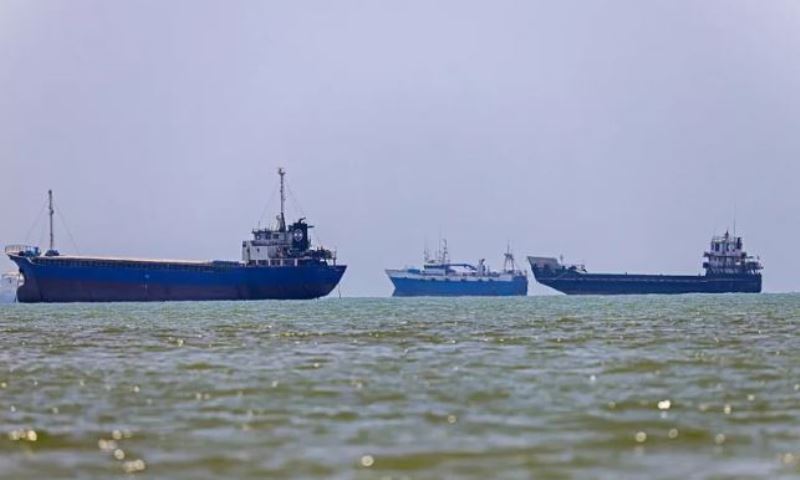
The United States has asserted that the Strait of Hormuz remains open to lawful maritime traffic, hours after Iran’s Islamic Revolutionary Guard Corps (IRGC) announced it was closing the strategically vital waterway “until further notice.”
In a statement posted on X, the US Central Command (CENTCOM) said that “traffic is flowing” through the strait and emphasized that US forces remain deployed to safeguard freedom of navigation.
“The Strait of Hormuz is open to all vessels seeking to lawfully transit the waterway. Iran does not control the international waterway used by commercial vessels to globally transport goods and energy,” CENTCOM said.
The US military added that its naval forces are “positioned and prepared to ensure that freedom of navigation remains available despite unwarranted Iranian aggression, harassment, threats and arbitrary declarations.”
According to CENTCOM, US forces have facilitated the safe transit of more than 800 commercial vessels and over 400 million barrels of crude oil during the past two months, while more than 140 ships have navigated the Strait of Hormuz in the last seven days.
The Joint Maritime Information Center (JMIC) also reported earlier that the southern shipping lane near Oman’s coast remained operational, despite Tehran’s announcement, indicating that commercial vessel movements were continuing through the critical maritime chokepoint.
Fresh Escalation Following US Strikes
The latest developments follow a sharp escalation in hostilities between Washington and Tehran.
According to US officials, American forces carried out another round of strikes against Iranian targets on Sunday after a Cyprus-flagged container vessel was reportedly attacked near the Strait of Hormuz. President Donald Trump ordered the operation, describing it as a response aimed at degrading Iran’s capability to threaten international shipping.
Iran retaliated by launching drone and missile attacks targeting military facilities in five Gulf nations, including Kuwait, Jordan and Qatar. Initial reports indicated only minor damage, with no casualties immediately reported.
Meanwhile, explosions were reported across several locations in southern Iran, including the energy and petrochemical hubs of Bushehr and Asalouyeh, the port cities of Bandar Abbas and Bandar-e Dayyer, and the Sirik region near the Strait of Hormuz. Iranian media also reported that a communications tower in Kerman Province was struck, injuring two people.
Hormuz at the Centre of Regional Tensions
The latest confrontation comes despite a memorandum of understanding signed by the United States and Iran on June 17 aimed at pausing hostilities. However, the fragile arrangement has steadily unraveled amid renewed military exchanges.
Three days ago, President Trump declared that the interim ceasefire was effectively over, reigniting fears of broader regional conflict.
The Strait of Hormuz, through which nearly one-fifth of the world’s seaborne oil trade passes, remains at the centre of the dispute. While Tehran has repeatedly claimed it can restrict access to the waterway, Washington maintains that the strait is an international shipping route that must remain open under international law.
The renewed tensions have heightened concerns across global shipping and energy markets, although commercial traffic continues to transit the waterway under heightened military surveillance and security measures.