
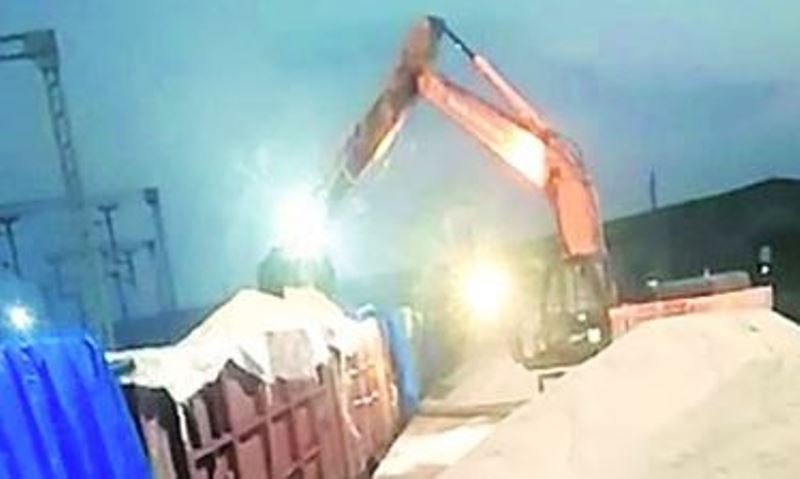
Indian Railways has flagged off the first industrial salt-loaded rake from Sanosara on the Bhuj–Naliya section to Dahej, marking a new milestone for the region’s salt industry.
Railway Minister Ashwini Vaishnaw, sharing the development on X, said the move would “open new avenues” for the salt sector and boost freight growth. The Ahmedabad Division Railway Manager (DRM) reported that the inaugural rake, loaded on August 9 at the Sanosara Goods Shed, carried 3,851.2 tonnes of industrial salt over a distance of 673.57 km, generating ₹31.69 lakh in freight earnings.
“This achievement strengthens India’s logistics network and boosts regional industry,” the DRM posted on X.
Meanwhile, preparations are underway for Prime Minister Narendra Modi’s visit to KSR Railway Station in Bengaluru on Sunday, where he will flag off three Vande Bharat Express trains. These include the long-awaited Belagavi–Bengaluru service, aimed at improving connectivity between North Karnataka and the state’s IT capital; a Katra Vaishno Devi–Amritsar service catering to pilgrims; and a Nagpur–Pune service linking two major industrial and technology hubs.
Union Minister Vaishnaw, who inspected the Vande Bharat Express on Saturday, called the launches “a matter of great happiness” for improving passenger convenience and economic connectivity.