
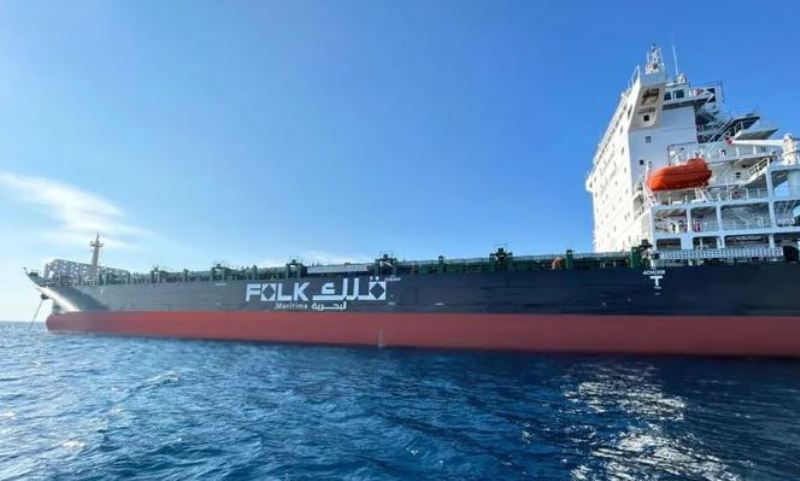
Saudi Arabia’s container shipping carrier Folk Maritime has shifted its India–Gulf service to focus on the Red Sea, as disruptions stemming from ongoing turmoil around the Strait of Hormuz continue to upend regional maritime routes.
With the Strait of Hormuz effectively closed to most commercial container vessels due to heightened geopolitical tensions in the Middle East, maritime operators are redirecting services to alternative corridors to keep supply chains flowing. The move comes amid a persistent reduction in shipping transits through the Gulf chokepoint — a key artery for energy and cargo movements between Asia, the Middle East and beyond.
Folk Maritime’s strategic redeployment:
- The Saudi state‑owned carrier is rerouting its India–Gulf Service (IGS) vessels away from the Persian Gulf toward the Red Sea, particularly focusing on Jeddah Port as a central hub for container traffic.
- Both of its IGS ships — the Folk Jeddah and Folk Dammam — have been repositioned, with the former currently navigating through the Red Sea after stopping at Aqaba, and the latter understood to be on course for Jeddah after departing Nhava Sheva.
- Although Folk Maritime’s service did not rely heavily on Hormuz originally, recent developments have impacted its operations along Saudi Arabia’s Gulf coast, prompting the shift.
Why the Red Sea is gaining prominence:
The disruption around Hormuz — one of the most strategic maritime passages for global trade — has forced many shipping lines to rethink their routing strategies. Vessels previously transiting the Gulf now face heightened risk, insurance costs, and operational uncertainty, making the Red Sea and alternate transshipment hubs more attractive, at least in the short term.
Industry analysts say that as long as tensions persist in the Persian Gulf, rerouted services through the Red Sea and other corridors will be essential for maintaining continuity of supply chains between Asia, the Middle East and Europe. However, global carriers also remain watchful of potential disruptions in the Red Sea itself, where conflict‑related risk factors have previously affected Suez Canal traffic.
Implications for global trade:
Shifting traditional shipping lanes can influence freight rates, transit times and logistical costs. Extended voyage distances and alternative routings may also put pressure on schedules, while port hubs like Jeddah emerge with enhanced strategic importance. As carriers continue to adapt, industry observers expect the situation in the Gulf and adjacent waterways to remain a key determinant of global maritime flow patterns in the months ahead.