
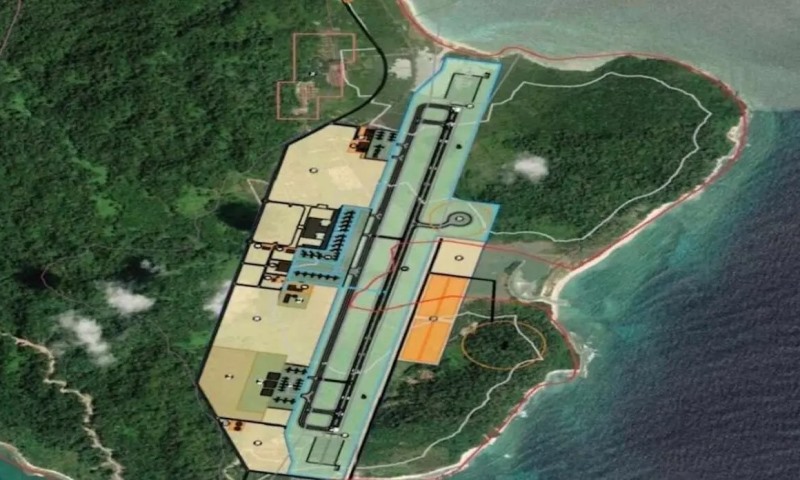
India is moving ahead with its ambitious $9 billion infrastructure project on Great Nicobar Island, aiming to reinforce its military and maritime presence near the strategically vital Malacca Strait amid rising global shipping security concerns.
The mega project, located in India’s remote Andaman and Nicobar archipelago, has gained renewed strategic importance as disruptions in the Strait of Hormuz following the U.S.-Iran-Israel conflict exposed the vulnerability of key global maritime chokepoints.
Positioned just about 150 kilometers from the western entrance of the Malacca Strait — one of the world’s busiest shipping lanes carrying over a quarter of global sea trade — Great Nicobar is being developed into a major maritime, logistics and defense hub. The strait is particularly critical for China, with nearly three-quarters of its imported crude oil supplies passing through the route.
The Indian government recently cleared the project after the National Green Tribunal dismissed environmental objections earlier this year. Spread across nearly 160 square kilometers of tropical forest, the development will be implemented in three phases.
The project includes an international container transshipment terminal, a dual-use civilian and military airport, a power plant and a township at Galathea Bay. Analysts say expanded airstrips and naval infrastructure will significantly improve India’s capability to deploy fighter aircraft, surveillance assets and naval forces deep into the Indo-Pacific region.
Strategic experts view the project as a major step in extending India’s defense footprint beyond the mainland and enhancing oversight of critical sea lanes.
According to Harsh Pant, the development strengthens India’s maritime surveillance, shipping monitoring and naval operational capabilities while reinforcing its role in the Indo-Pacific.
Security analysts also say the ongoing tensions around Hormuz have accelerated India’s urgency to build stronger deterrence capabilities in the Indian Ocean region.
Retired Brigadier Arun Sahgal described the move as part of a broader strategy to ensure secure maritime trade routes and prevent external powers from dominating critical waterways.
China’s expanding footprint in the Indian Ocean is also seen as a major driver behind the project. Beijing has steadily increased its regional presence through ports and infrastructure projects in countries such as Sri Lanka and Pakistan, alongside growing naval deployments across the region.
Analysts say the Great Nicobar project will help India counterbalance China’s maritime influence while enhancing its own economic and strategic leverage in the Indo-Pacific.