
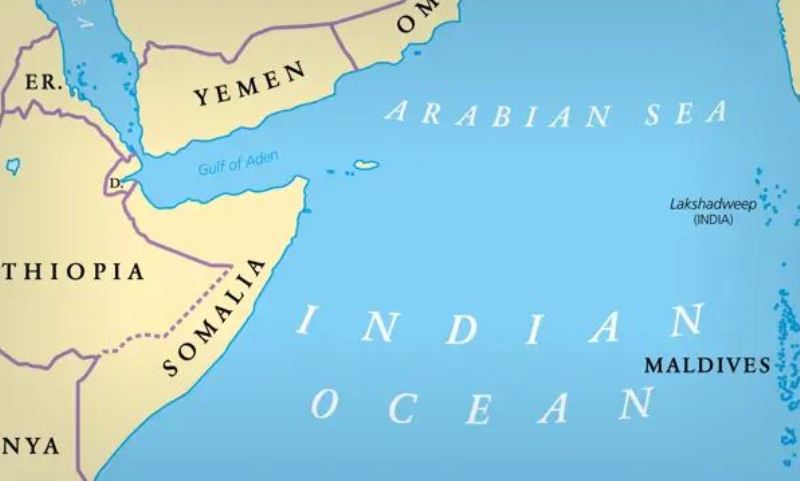
A resurgence of Somali piracy is raising fresh concerns across the global shipping industry, with seven hijackings recorded since the beginning of 2026 involving cargo dhows, fishing vessels, and tankers operating in the western Indian Ocean.
According to discussions between maritime industry representatives and EU Naval Forces, three hijacked vessels and their crews remain anchored off the Somali coast as of early June, with pirates reportedly holding them for ransom.
The recent spike in attacks comes amid a period of heightened military activity in the Red Sea, Gulf of Aden, and Somali Basin linked to regional conflicts involving Iran. Security experts note that naval assets in the region have been stretched, reducing the deterrent presence that had helped suppress piracy over the past decade.
Recent incidents have followed familiar Somali piracy tactics, with hijacked dhows being used as “motherships” to extend the operational reach of pirate groups. Attacks have been reported as far as 250 nautical miles from the Somali coastline, as well as in nearshore waters.
Maritime security analysts believe the increase in piracy activity suggests that criminal networks in Somalia have rebuilt their operational infrastructure and strengthened relationships with local communities and clan networks, enabling them to sustain hostage-for-ransom operations. Reports have also indicated possible links between pirate groups, al-Shabaab militants, and Yemen’s Houthi movement, although the extent of any cooperation remains unclear.
The latest incidents revive memories of the piracy crisis that plagued international shipping between the mid-2000s and early 2010s, when hundreds of seafarers were taken hostage and shipowners paid millions of dollars in ransom to secure vessel releases.
Industry stakeholders are urging ship operators to maintain strict adherence to Best Management Practices for Maritime Security (BMP MS) and regularly consult Maritime Industry Security Threat Overviews (MISTO) to mitigate piracy risks.
Military authorities continue to assess piracy as a credible threat along the Somali coast and throughout the Somali Basin. However, the strengthening southwest monsoon season from June through August is expected to temporarily hinder offshore piracy operations by creating rough sea conditions. Despite this seasonal disruption, coastal waters remain suitable for small-boat activity, leaving a persistent risk of opportunistic attacks against merchant vessels.
The renewed threat underscores the need for continued vigilance by shipowners, operators, and crews navigating one of the world’s most strategically important maritime trade corridors.