
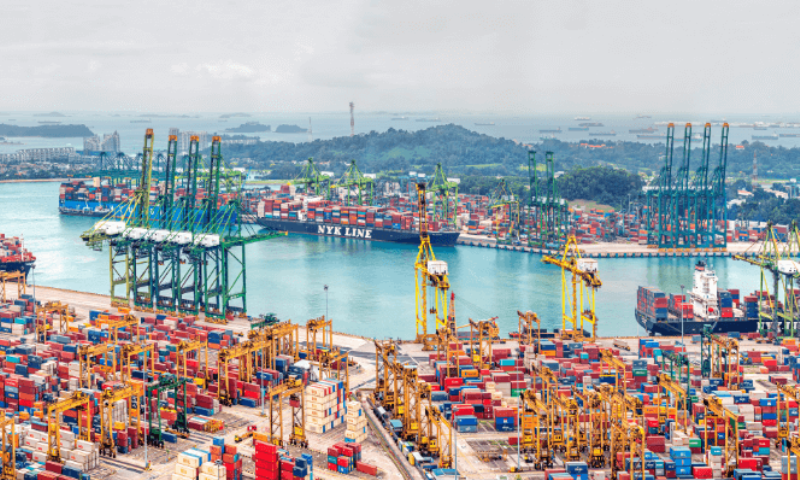
The Port of Singapore recorded container throughput of 3.94 million TEU in May, reflecting a 3% increase compared with the same period last year, underscoring the resilience of one of the world’s busiest transshipment hubs despite softer demand in the marine fuel market.
The growth in container volumes highlights continued strength in regional and international trade flows passing through Singapore, which serves as a key gateway connecting major shipping routes across Asia, Europe, the Middle East, and the Americas. Strong transshipment activity and sustained liner services contributed to the increase in cargo handling during the month.
In contrast, bunker fuel sales at the port declined by 6.8% year-on-year in May. The drop reflects changing vessel operating patterns, market conditions in the global shipping sector, and evolving fuel procurement strategies among shipowners and operators. Industry analysts also point to ongoing efforts by shipping companies to improve fuel efficiency and optimize voyage planning as factors influencing bunker demand.
Despite the decline in bunker sales, Singapore remains the world’s leading bunkering hub, supported by its extensive fuel supply infrastructure, strategic location, and broad range of marine services. The port continues to play a central role in supporting global shipping networks and facilitating international trade.
Port and industry stakeholders are closely monitoring developments in both container shipping and marine fuel markets as global trade conditions continue to evolve. Growth in container throughput is viewed as a positive indicator of cargo demand and supply chain activity, while bunker market trends remain influenced by freight demand, vessel deployment patterns, and fuel price movements.
Looking ahead, Singapore is expected to maintain its position as a major maritime and logistics hub through continued investments in port infrastructure, digitalization, and sustainability initiatives. These efforts are aimed at enhancing operational efficiency and supporting long-term growth in container handling and maritime services.