
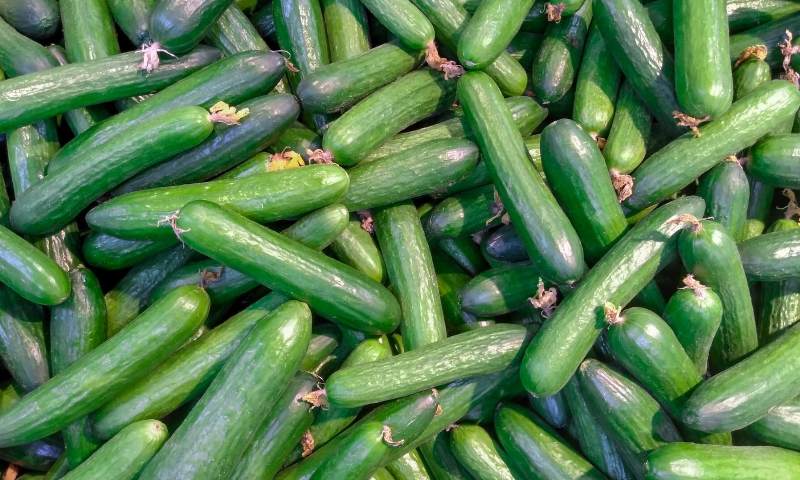
India’s gherkin industry is strengthening its position in global markets by capitalising on its ability to produce small-sized, premium gherkins throughout much of the year. The segment has evolved over four decades into a highly organised, export-oriented industry supported by contract farming and specialised processing facilities.
India exported around 314,519 tonnes of processed gherkins worth $307.61 million in FY2025-26, according to APEDA data. Export volumes increased significantly from the previous year, underlining continued international demand for Indian produce.
A key competitive advantage is India’s ability to consistently supply very small gherkin sizes. The highest-value grades are generally 0–3 cm and 1–4 cm, which are widely used for premium cornichons. Smaller fruits command higher prices, encouraging farmers and processors to focus on frequent harvesting to maintain the required size and quality.
Gherkins are cultivated mainly in Karnataka, Tamil Nadu and Andhra Pradesh, with production also expanding into Telangana and Maharashtra. The crop is predominantly grown under contract farming arrangements, allowing processors to provide farmers with seeds and technical guidance while maintaining greater control over quality, traceability and supply.
The harvesting process is particularly important to India’s export model. Gherkins can require daily picking, as allowing the fruit to grow beyond the preferred size reduces its value for premium processing. India’s relatively manageable harvesting costs and availability of family labour provide exporters with an additional advantage in producing small-sized grades.
India currently exports gherkins to more than 40 countries, with Europe, the United States and Russia among the major markets. Germany, France, the Netherlands, Belgium, Poland and Spain are important European destinations, while demand is also present across the Middle East, North America and Asia-Pacific.
The industry’s export base has also become more diversified. In FY2025-26, shipments to the US faced tariff-related pressure, but stronger demand from Germany, Russia, Canada and other markets helped offset the decline. Germany imported more than 35,000 tonnes, while Russia’s purchases also increased substantially.
India faces competition from suppliers including Turkey, Vietnam, Sri Lanka, Egypt and Eastern European producers. However, the combination of year-round cultivation, small-fruit production, contract farming, processing capacity and established export networks gives Indian suppliers a distinctive position in the global market.
The sector is also looking beyond bulk preserved gherkins toward private-label products and value-added pickled vegetables, potentially creating additional opportunities for Indian processors and exporters.
With global buyers continuing to seek reliable supplies of premium small-sized gherkins, India’s ability to combine consistent quality with competitive production costs could help the country further expand its presence in the international processed-vegetable trade.