
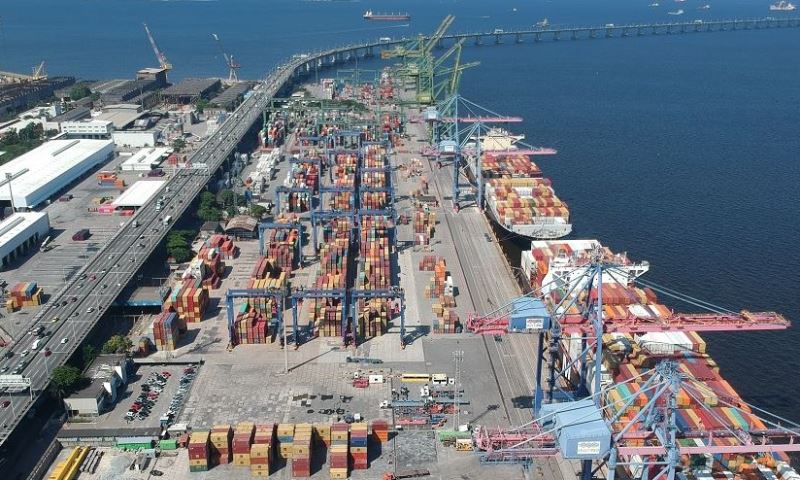
Brazilian port terminal groups are pressing the government to authorize urgent dredging of the Tapajós River, warning that falling water levels and the growing threat of a strong El Niño could disrupt one of the country’s key grain-export corridors.
The Tapajós is a critical logistics route for Brazil’s agricultural exports. Major trading companies including Bunge, Cargill and Louis Dreyfus move around 15 million tonnes of grain annually along the waterway. Grain from terminals around Itaituba is transported by barge to Santarém and Barcarena in Pará state before being shipped to international markets.
The port sector is particularly concerned about water levels in several shallow sections of the river. Jesualdo Conceição Silva, head of the Brazilian Port Terminals Association (ABTP), said water levels are already declining and warned that navigation restrictions could begin in the most critical stretches from mid-September if conditions deteriorate.
The government, however, has so far declined to authorize maintenance dredging between Itaituba and Santarém. The Ministry of Ports and Airports said its decision followed technical assessments and consultations with Indigenous peoples and traditional communities in the region.
The dispute has environmental and social dimensions. Indigenous groups have opposed dredging, citing concerns over potential impacts on water quality, fisheries and traditional livelihoods. Earlier this year, Indigenous protesters occupied Cargill facilities in Santarém over concerns about government measures that could facilitate dredging without adequate consultation.
Industry groups argue that the stakes are significant for Brazil’s export logistics. The Pará Federation of Industries has warned that prolonged low water levels could disrupt the movement of up to 5 million tonnes of grain and affect fuel supplies to 17 municipalities in the region.
The weather outlook is adding urgency to the debate. Brazil’s National Centre for Monitoring and Early Warning of Natural Disasters (CEMADEN) has projected more than an 80% probability of El Niño developing during the second half of 2026, with a moderate-to-strong intensity possible. The phenomenon can intensify drought conditions in northern Brazil.
The Tapajós experienced severe navigation problems during previous droughts in 2023 and 2024, when exceptionally low water levels disrupted cargo movements. Port operators fear a repeat of those conditions could force vessels and barges to reduce loads, increase transport costs and eventually suspend navigation in the shallowest sections.
The government continues to monitor river levels and has indicated that it could reassess the situation if navigation conditions worsen. For Brazil’s northern grain-export network, the coming weeks will therefore be crucial in determining whether the Tapajós can maintain reliable navigation through the peak of the dry season.