
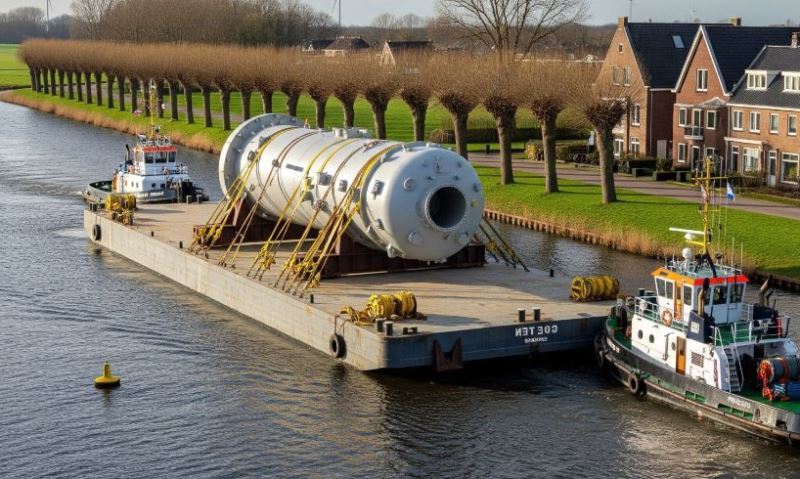
New industrial activity in the Netherlands could provide a fresh source of heavy freight for the country’s inland shipping sector, according to a new report. Growing volumes of wind-turbine components, steel and semi-finished metal products are creating new opportunities for inland waterway transport.
The report highlights the emergence of new heavy industries as an important development for Dutch inland shipping, particularly as traditional cargo flows face structural changes. The Netherlands’ extensive network of rivers and canals provides an efficient option for moving oversized and heavy industrial cargo between production sites, ports and logistics hubs.
Wind-energy projects are expected to be particularly significant, with large turbine components requiring specialised transport solutions because of their size and weight. Inland vessels can offer an alternative to road transport for such cargo, helping reduce congestion and the logistical challenges associated with moving oversized loads.
The growth in steel and semi-finished metal products could also generate additional barge traffic, strengthening connections between industrial clusters and major ports such as Rotterdam. Inland waterways already play an important role in the Dutch freight system, handling a substantial share of the country’s cargo movements.
The outlook comes as Dutch inland shipping continues to face challenges including labour shortages, rising operating costs and uncertainty around fuel prices. Panteia expects inland waterway transport costs to broadly stabilise in 2026, although geopolitical developments remain a key source of uncertainty.
The emergence of new heavy industries therefore offers the sector an opportunity to diversify its cargo base and capture additional freight volumes, particularly as the Netherlands accelerates investments in renewable energy and industrial transformation.