
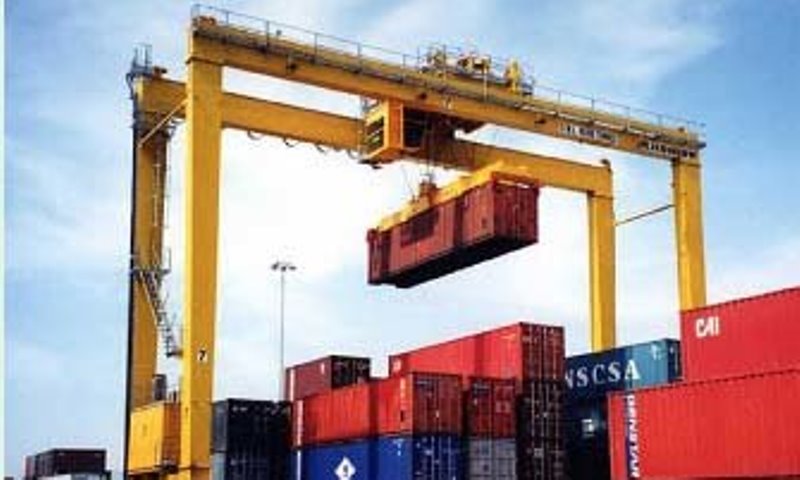
Terminal Cuenca del Plata S.A. (TCP) has completed the conversion of its third rubber-tyred gantry (RTG) crane from diesel to electric power.
The equipment is already working on loading and unloading trains arriving at the terminal, which is the only one in southern Brazil to have a railway with direct access to the primary zone, inside the operations yard.
Kayo Zaiats, TCP’s Health, Safety and Environment Manager, said: “The electrification process of the third RTG is in line with our commitment to sustainability and is part of the pilot plan to decarbonise operations at the Paranaguá Container Terminal.
“In terms of reducing emissions over the course of a year, converting the three RTGs is equivalent to removing approximately 369 vehicles from the streets.”
Compared to diesel versions, the Terminal’s eRTG cranes ensure a 97 per cent decrease in GHG emissions and a 21 per cent increase in productivity in the railway operation, which handles an average of 8,500 containers each month.
TCP’s Maintenance Manager, Erico Luiz Manso, explained: “The new eRTGs have reduced maintenance costs by up to 80 per cent, as well as being safer, after receiving new automation technology with the implementation of an auto-steering system, so that the operator no longer needs to control the fine-tuning of the equipment’s direction on the transfer lanes.”
In January, Kalmar, part of Cargotec, concluded an agreement with TCP to supply 20 Kalmar hybrid straddle carriers for deployment at the terminal in the Port of Montevideo, Uruguay.