
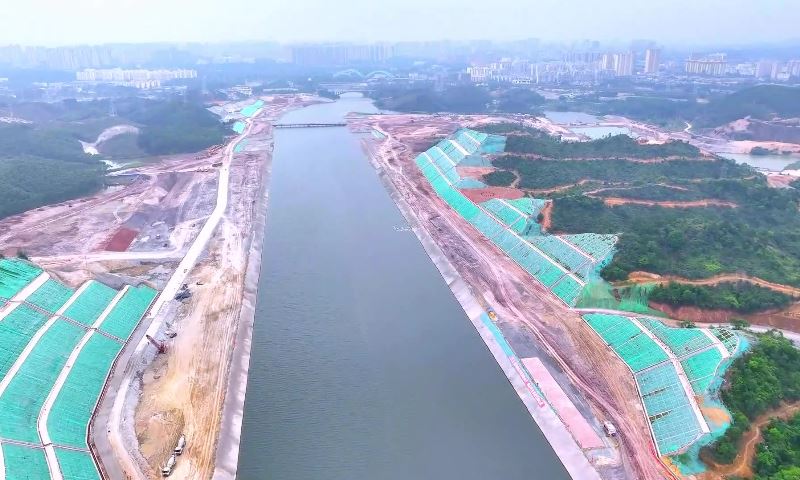
China is constructing a massive 134-kilometre canal through mountainous terrain as part of a strategic infrastructure push aimed at reducing reliance on longer maritime routes and strengthening inland trade connectivity.
The ambitious project is designed to connect major river systems and create a shorter cargo transport corridor for goods moving between inland manufacturing regions and coastal export hubs. Chinese authorities view the canal as a long-term initiative to improve logistics efficiency, lower transportation costs, and support regional economic development.
Industry analysts said the canal reflects Beijing’s broader strategy of reshaping trade geography through large-scale infrastructure investments that integrate inland industrial zones more closely with domestic and international supply chains.
The project is expected to support movement of bulk cargo, containers, and industrial commodities while reducing pressure on congested road and rail networks. Improved inland waterway transport could also help China lower fuel consumption and emissions associated with long-distance trucking.
Construction through mountainous areas poses significant engineering challenges, including extensive tunnelling, water management systems, and terrain stabilisation works. However, officials believe the canal could substantially improve cargo movement capacity once operational.
Trade experts noted that the project highlights China’s continued focus on strengthening strategic logistics corridors amid evolving global trade dynamics, geopolitical tensions, and shifting manufacturing patterns. The canal is also expected to enhance connectivity between western and southern economic regions, reinforcing China’s long-term infrastructure-led growth strategy.