
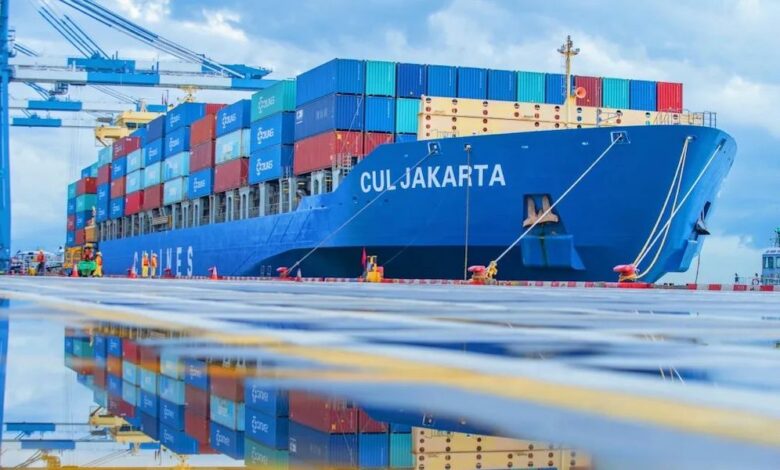
CULines has strengthened its Southeast Asia shipping network with the launch of three new regional feeder services—MV1, MI1 and IP1—designed to enhance connectivity between Vietnam, Indonesia and its transshipment hub at Port Klang Westport.
The new services will enable export cargo from Ho Chi Minh City and Jakarta to reach Port Klang Westport within three to four days, where shipments can seamlessly connect to CULines’ long-haul services. The integrated “Southeast Asia Feeder + Port Klang Transshipment Hub + Trunk Service” model is expected to provide faster and more efficient cargo movement across key international trade routes.
The expanded network offers exporters in Southeast Asia a one-stop logistics solution with direct access to the Indian Subcontinent, the Middle East, the Red Sea, the East Mediterranean and North Africa.
All three services will operate on a weekly frequency, with inaugural sailings scheduled for early July 2026.
The new service rotations are:
MV1: Ho Chi Minh City – Port Klang – Ho Chi Minh City
MI1: Jakarta – Port Klang – Jakarta
IP1: Jakarta – Port Klang
The latest expansion underscores CULines’ continued focus on strengthening regional feeder connectivity and enhancing transshipment capabilities at Port Klang, enabling customers to benefit from improved transit times, wider market access and more reliable supply chain solutions across Southeast Asia and beyond.