
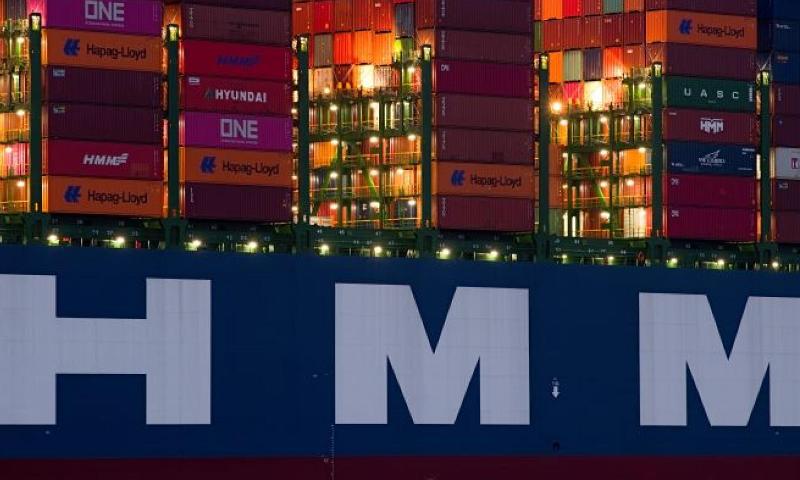
South Korean shipping company HMM has ordered a fleet of containerships and very large crude carriers (VLCCs) worth KRW 4 trillion (about $2.9 billion).
As informed, the order includes a dozen 13,000 TEU sister ships and two VLCCs.
The 13,000 TEU container vessels, all liquefied natural gas (LNG) dual-fueled, will be built by HD Hyundai Heavy and Hanhwa Ocean.
As decarbonization regulations from the IMO and EU continue to strengthen, LNG is viewed as one of the most readily deployable lower-emission fuels. According to Clarksons Research, alternative fuel vessels made up nearly 50% of all newbuildings ordered last year, with over 70% powered by LNG.
By adding these new LNG dual-fueled vessels to its existing portfolio, which already includes methanol-powered containerships and LNG-powered vessels, HMM aims to strengthen its position in sustainable shipping.
Furthermore, the new VLCCs will also contribute to diversifying and reinforcing the company’s bulk fleet portfolio.
This move is said to reflect HMM’s 2030 mid-to long-term strategy to secure a more flexible and future-ready fleet amid global market and regulatory shifts, according to the company.
To remind, HMM unveiled last year a massive KRW 23.5 trillion investment in sustainable growth by 2030.
Under the plan, the company plans to acquire around 70 green vessels by 2030 and establish a carbon-neutral ecosystem across all transportation segments by 2045.
The South Korean shipping major said it would allocate KRW 14.4 trillion or over 60% of the total investment to sustainable management initiatives, including low-carbon ships and green facilities.